A place where economics, financial markets, and real estate intersect.
Showing posts with label GDP. Show all posts

Wednesday, August 29, 2018

Morning Report: Q2 GDP revised upward

Vital Statistics:


LastChange
S&P futures2899-1
Eurostoxx index385.810.35
Oil (WTI)69.080.55
10 year government bond yield2.88%
30 year fixed rate mortgage4.55%

Stocks are flat this morning after GDP came in better than expected. Bonds and MBS are down small. 

Mortgage Applications fell 1.7% last week as purchases fell 1% and refis fell 3%. This is despite a drop in rates. 

Second quarter GDP was revised upward to 4.2% from 4.1%, which was higher than the street estimate of 4.0%. The main revisions were to consumption (downward) and fixed residential investment (upward). Inventories were a drag on GDP, which means that we should see a bump to Q3's numbers. The GDP price index was also revised up a touch, from 1.8% to 1.9%. All of this provides a good environment for the Fed to ease back from the zero bound. 


Mortgage bankers made $580 per loan in the second quarter, an increase from $118 in the first quarter. Banks cut costs aggressively (dropping production costs per loan by about $1,000) however declining volumes offset that, and this turned out to be the weakest quarter since the MBA began keeping records in 2008. That $580 represents a profit of 21 basis points per loan, which was a drop form 24 bps a year ago. Fee income dropped to 341 bps from 370 in the first quarter. Refis continue to decline, with purchases accounting for 81% of all volume. 

Here is something wild. Last night, there were no trades in the JGB market (the world's second largest bond market). This is the 7th time this has happened this year. The Bank of Japan basically controls the market, and trading has dried up. We live in interesting times, at least if you are a central banker. 

Pending Home sales fell 0.7% in July, according to NAR. Lawrence Yun, NAR chief economist, says the housing market’s summer slowdown continued in July. “Contract signings inched backward once again last month, as declines in the South and West weighed down on overall activity,” he said. “It’s evident in recent months that many of the most overheated real estate markets – especially those out West – are starting to see a slight decline in home sales and slower price growth.” Blame tight supply, which has driven up prices to unaffordable levels. 

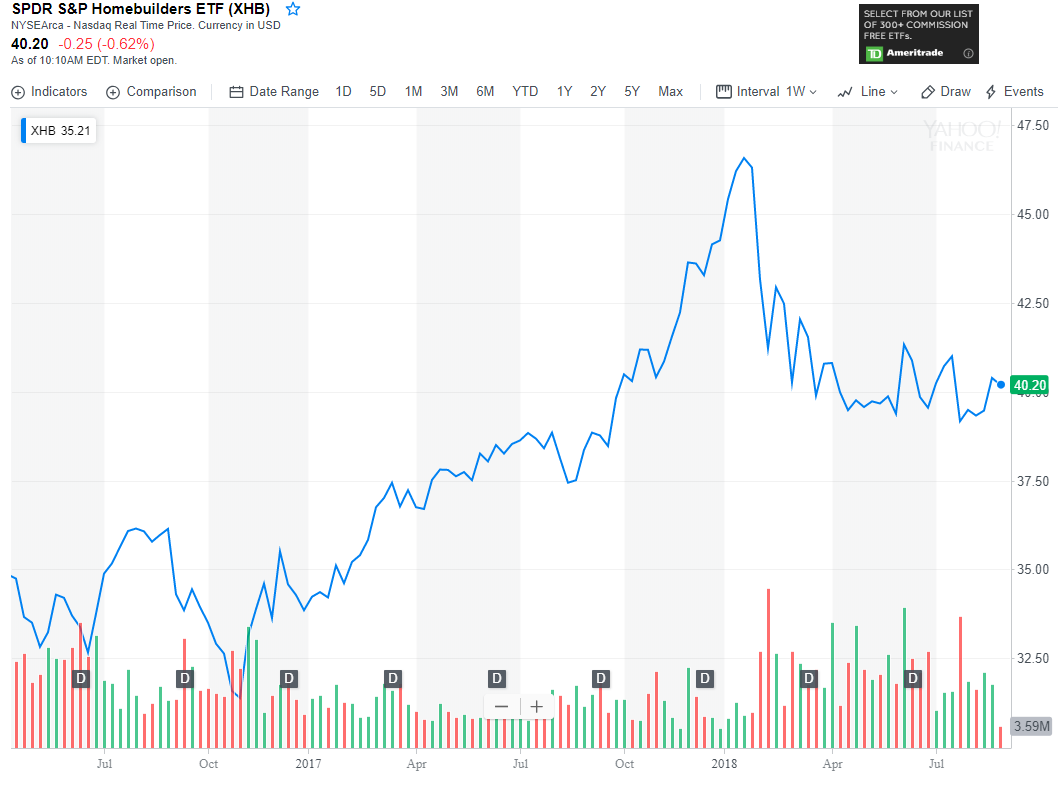
The housing slowdown has not been lost on the stocks of the homebuilders, who despite strong earnings (and an incredibly strong stock market) are down 14% YTD. At some point, the sector will be unable to rely on increasing ASPs and will have to pump up volume to show growth. Despite the clear need for new housing, especially at the starter level, builders seem content to meter their growth and plow excess cash into buybacks. 

Friday, July 27, 2018

Morning Report: Blockbuster GDP print

Vital Statistics:

Last Change
S&P futures 2842 2
Eurostoxx index 391.88 1.35
Oil (WTI) 69.55 -0.1
10 Year Government Bond Yield 2.95%
30 Year fixed rate mortgage 4.62%

Stocks are up this morning after blowout earnings from Amazon and a strong GDP report. Bonds and MBS are up.

Second quarter GDP came in at 4.1%, a big jump from the first quarter, and the highest print in 4 years. Q1 was revised upward to 2.2% from 2.0%. The inflation numbers were good as well. Q2 inflation came in at 1.8% which was a decrease from the 2.5% pace in Q1. Ex-food and energy, prices increased 2%. Consumption increased 4%, while investment increased 2.1%. Capital Expenditures increased strongly, while residential construction fell. Inventories fell, which dismisses the talking point that Q2 was artificially boosted by inventory build ahead of a trade war. 


Note that international trade was a big boost to GDP numbers. While economists talk about trade wars negatively affecting growth, remember that GDP includes the net trade balance. So if imports fall in response to tariffs, that will actually increase GDP. Does that mean you can goose growth via trade spats? No, but trade wars that reduce the trade deficit will bump up the GDP numbers, which is largely an accounting question. 

In the wake of the GDP report, the Fed funds futures are predicting a 90% chance of a Sep hike and a 68% chance of a Sep and Dec hike. 

Freddie Mac reported that delinquencies fell in June and they are back to pre-hurricane levels. 

Foreign demand for US residential property fell in 21% Q1, according to NAR. Foreign buyers accounted for 8% of existing home sales, a drop from 10% in the previous period. While a drop in foreign buying will help alleviate the supply / demand imbalance in the US resi market, new construction is really needed to square the circle, and judging by the GDP numbers, that still isn't happening. 


Thursday, June 28, 2018

Morning Report: First quarter GDP revised downward.

Vital Statistics:

Last Change
S&P futures 2695 -8.5
Eurostoxx index 376 -3.9
Oil (WTI) 72.39 -0.39
10 Year Government Bond Yield 2.83%
30 Year fixed rate mortgage 4.53%

Stocks are lower this morning on overseas weakness. Bonds and MBS are flat. 

The third estimate for first quarter GDP came in lower than expected, as an upward revision in the price index and a downward revision in consumer spending lowered the third and final estimate from 2.2% to 2%. The price index was revised upward from 1.9% to 2.2%, while consumer spending was revised downward from 1% to 0.9%. Housing was actually a negative in the first quarter. I may sound like a broken record, but from 1959 to 2002, housing starts averaged 1.5 million per year, with a much smaller population. Post-bubble, we have averaged around a million per year. Just to get supply and demand into balance probably requires 2 million starts, which would do wonders for GDP. Incidentally, yesterday's inventory figures prompted the Atlanta Fed to take up its tracking estimate for second quarter GDP to 4.5%. 


The drop in the 10 year yield has probably been influenced by the Fed Funds futures, which have been inching towards one more hike this year as opposed to 2. Current probability levels:
  • No more hikes: 11%
  • One more hike 44%
  • Two more hikes: 42%
  • Three hikes 2%
While the US economic data probably supports more hikes in interest rates, wage growth remains muted, and the sell-off in emerging markets is being viewed as a canary in the coal mine for global growth. Finally fears of a trade war are bearish for the economy, which would give the Fed another excuse to hold off in either September or December. 

Initial Jobless Claims increased to 227k last week, which is still an astoundingly low level. Meanwhile corporate profits were revised upward in the first quarter from 0.1% to 2.7%. 

Ben Carson testified in front of the House Financial Services Committee yesterday, where he laid out some of the changes he has implemented at HUD. He has made some changes with the Home Equity Conversion Mortgage program (aka reverse mortgages) to put the insurance fund on sounder footing. He is emphasizing the removal of lead paint and other hazards in HUD housing, and has suspended the Obama-era scheduled cut in the FHA mortgage insurance premium. HUD is concerned about the number of FHA cash-out refinances, which have increased from 45% of refis to 60% in the last year. (As an aside, since rate / term refi opportunities are largely gone, so you would expect to see an increase in the percentage of cash-outs). 

Why socially responsible investing sounds like a nice idea, but isn't a free lunch. You can "do good" but you should be prepared to underperform


Wednesday, May 30, 2018

Morning Report: Markets now heavily discounting 4 hikes this year

Vital Statistics:

Last Change
S&P futures 2705 4
Eurostoxx index 384.58 0.1
Oil (WTI) 67.12 0.39
10 Year Government Bond Yield 2.84%
30 Year fixed rate mortgage 4.45%

Stocks are slightly higher this morning as Italian bonds bounce. Bonds and MBS are down. 

US Treasuries touched 2.76% yesterday on the flight to quality trade. The Fed Funds futures are now predicting a 81% chance of a hike in June. The biggest effect of the Italy situation can be seen in the December Fed Funds futures. A couple of weeks ago, we were looking at a coin toss for 4 hikes this year. Now it is closer to 20%. The dot plot consensus is 3, so the markets are aligning a little closer to what the Fed thinks it is going to do.


Why is Italy worrying the markets so much? Italy has a huge amount of debt - 1.9 trillion euros worth. Its debt to GDP ratio is 130%. The fear is that the uncertainty over this issue over the summer will depress Euro growth, while the banking sector (which already has some issues) will take further hits. As of now, this is a political, not an economic issue - Italian yields are around 3%, nowhere near the 8% level they hit in 2012. Note that Spanish yields are beginning to creep up as well. 

Mortgage Applications fell 3% last week as purchases fell 2% and refis fell 5%. This is the 8th consecutive decline. The refi index is down to the lowest level since December 2000. "Rates slipped slightly over the week as concerns over U.S. trade policy and global growth sent some investors back to safer U.S. Treasuries," said MBA Associate Vice President of Economic and Industry Forecasting Joel Kan. "Minutes from the most recent Federal Open Market Committee meeting also yielded a more dovish tone, which added to the downward pressure in rates. Our 30-year fixed mortgage rate decreased two basis points over the week to 4.84 percent as a result. Both purchase and refinance activity decreased despite the drop in rates, part of which was due to slowing activity before the Memorial Day holiday."

The second estimate for GDP came in at 2.2%, right in line with the first estimate. Inflation was revised downward a touch from 2% to 1.9% and consumption was revised downward from 1.2% to 1%. Inventories were revised downward, while business investment was revised up to 9.2% - a big number. 

Whether the increase in business investment was a direct result of the tax cuts remains to be seen, but so far tax cut effects aren't showing up in corporate profits which were more or less flat in the first quarter with last year. 

The economy created 178,000 jobs in May, according to the ADP Employment Report. The Street is looking for 190,000 jobs in Friday's report, although the ADP and BLS reports have been pretty far away the last few times around. The key number will be wage growth, not payroll growth in any case. 

Interesting data points in the ABA survey of the nation's banks. QM has actually caused banks to decrease non-QM lending (which was the opposite of the intended effect). About half retained servicing. Almost nobody lends to FICOs below 620.

The Fed is set to announce proposed changes to the Volcker Rule, which severely limits proprietary trading activities for commercial banks. The current rules are so vague that JP Morgan Jamie Dimon once quipped that traders would need a lawyer and a psychiatrist by their side to determine whether they were in compliance with the law. The Fed will probably tweak the rules only modestly, and will not usher in a return to pre-2008 rules. That would require legislation, which isn't happening. 

Friday, April 27, 2018

Morning Report: GDP comes in better than expected

Vital Statistics:

Last Change
S&P futures 2673 -1.5
Eurostoxx index 384.63 0.87
Oil (WTI) 67.92 -0.27
10 Year Government Bond Yield 2.97%
30 Year fixed rate mortgage 4.62%

Stocks are flat this morning after GDP came in higher than expected. Bonds and MBS are up small. 

The advance estimate of first quarter GDP came in at 2.3%, higher than the Street 2.0% estimate. Consumption rose 1.1%, in line with estimates, and inflation was lower than expected at 2%. In many ways, this was a Goldilocks type report, with decent growth and controlled inflation. The savings rate increased to 3.1%, compared to 2.6% in the fourth quarter. One note of caution: the first quarter has had some quirky measurement issues over the past several years, which has subjected it to subsequent upward revisions. The tax cuts will probably have a similar effect this time around. 


Wage inflation is picking up, according to the Employment Cost Index which rose 0.8% for the quarter and is up 2.7% for the year. Wages and salaries increased 0.9% compared to 0.5% in the previous quarter. For the Fed, these two reports this morning are great news. Real wage growth (2.7% increase in wages and salaries less a 2% increase in inflation) with moderate growth and inflation. 

Consumer sentiment slipped from March's 14 year high in April to a still strong 98.8.

The Fed Funds futures are predicting a 93% chance of another 25 basis point hike at the June meeting. 

North and South Korea pledged to de-nuclearize the peninsula and declare an official end to the 50 year old Korean War. 

Freddie Mac is introducing its 3% down product for first-time homebuyers - HomeOne. With an Affordable Second, the LTV can go as high as 105%. Income and geographic limits are intended to reach a broad audience. 

Wednesday, March 28, 2018

Morning Report; Fourth quarter GDP revised upward to 2.9%.

Vital Statistics:

Last Change
S&P futures 2623.25 8
Eurostoxx index 366.29 -1.28
Oil (WTI) 64.88 -0.37
10 Year Government Bond Yield 2.77%
30 Year fixed rate mortgage 4.45%

Stocks are lower this morning following yesterday's sell-off. Bonds and MBS are up on the risk-off trade. 

The market leaders (in other words the FAANG stocks) are getting taken to the woodshed on Facebook is down about 20% from mid-February. Is it time to rename the index fAANG?

Mortgage applications rose 4.8% last week as purchases rose 3% and refis rose 7%. Despite the jump in refis we are still at lows not seen for a decade. 

Q4 GDP was revised upward by 40 basis points to 2.9% in the third and final revision. The Street was looking for an upward revision of 20 bps. Consumption was bumped up 20 bps to 4%, while the price index was unchanged at 2.3%. Inventory was increased as well. For 2017, GDP increased 2.3% compared to 1.7% in 2016. 

Pending Home Sales rose 3.1% in February, according to NAR. Despite the gain, it is still over 4% lower than a year ago. That said, February 2017 was exceptionally strong. Expect to see a decrease in March, at least in the Northeast, after a series of storms. 

Home Price appreciation continues as the Case-Shiller Home Price Index increased 6.3% YOY in January. Seattle led the group, increasing almost 13%, followed by San Francisco and Las Vegas. All MSAs reported year-over-year gains. The smallest increases were in the Washington DC and some of the Midwest. 

Increasing real estate prices are pushing up home equity, which grew over $15,000 on average in the fourth quarter, according to CoreLogic.  It was biggest in California, where it jumped $40,000. This is the biggest increase in 4 years, and should bump up consumer spending. Since home equity is considered more permanent than stock market equity, it should affect consumer spending more. 


Consumer confidence slipped a little in March, but is still at elevated levels. The tax cuts are helping to offset some of the losses in the stock market. Generally speaking, consumer confidence indices are inverse S&P indices, so expect them to fall if this sell-off continues. 

As the Spring Selling Season takes shape, we are seeing the biggest home price appreciation at the middle and lower tiers of the market, where there is the biggest supply problem. While mortgage rates are rising, so far they aren't making a dent in housing demand. Surprisingly, Moody's thinks the tax new tax law will dampen home price appreciation about 4% over the next few years, due to the changes in the mortgage interest deduction (which will pretty much only affect the high end in certain states) and increased interest rates due to rising deficits. Perhaps. At any rate, I think the supply / demand imbalance is the biggest driver of home prices, and that will probably get worse before it gets better. 


Wednesday, February 28, 2018

Morning Report: Jerome Powell spooks the bond market

Vital Statistics:

S&P Futures  2751.5 4.0
Eurostoxx Index 381.0 -1.3
Oil (WTI) 63.0 0.0
US dollar index 84.1 0.1
10 Year Govt Bond Yield 2.89%
Current Coupon Fannie Mae TBA 102.313
Current Coupon Ginnie Mae TBA 102.531
30 Year Fixed Rate Mortgage 4.4

Stocks are marginally higher this morning after the second revision to fourth quarter GDP came in as expected. Bonds and MBS are flat.

Fourth quarter GDP increased at 2.5%, which matched Street expectations. The price index was revised downward a touch and consumer spending was revised upward. For the year, GDP increased at 2.3% versus 1.6% for 2016. Inflation is picking up, as the price index rose 2.5% versus 1.7% in the third quarter. Excluding food and energy, the index was up 1.9%, compared to 1.3% in the third quarter. 

The Chicago PMI decelerated last month, but still came in at a strong 61.9. The number was below estimates however. 

Pending Home Sales fell 4.7% in January, according to NAR. This is down 3.8% YOY and the lowest since October 2014 after the Taper Tantrum. Despite higher rates and smaller inventory, traffic was up YOY in January, except for the Northeast, which could have been weather-driven. 

Jerome Powell spooked the bond markets yesterday during his testimony in front of the House. He acknowledged that inflation is accelerating and that the economy has improved since the meeting in December, and that statement pushed bond yields higher. He said he didn't want to "prejudge a new set of projections," referring to the dot plot at the March meeting. Powell will testify in front of the Senate tomorrow. 

The Fed Funds futures didn't really do much in response: The March futures are now handicapping an 87% chance of a hike and the consensus is still for 3 hikes this year. 

Mortgage applications increased 2.7% during the holiday-shortened week, with the refi index falling 1% and the purchase index increasing 6%. The average contract rate was 4.64%, unchanged from the prior week. 

The NAR and ATTOM weigh in on the real estate outlook for 2018. Unsurprisingly, they expect the inventory issue to continue, and homebuilders to modestly ramp up production while constrained by labor shortages. They point out also that the churn of move-up buyers has largely collapsed post-crisis. The average tenure (or amount of time that someone has lived in their home) has doubled since the crisis, from just over 4 years to 8 years. This lack of churn depresses the number of homes available on the market. I wonder if the churn was simply an issue related to underwater homeowners - short sales are tough to do. Second, as the foreclosure inventory is largely worked through, with the exception of the Northeast and a few other states, distressed homes are drying up. I suspect the professional investors who bought these homes will want to ring the register at some point, but that will be a function of interest rates and home price appreciation. 

Lowe's missed Street estimates and is down 8% pre-open. It looks like this is a company-specific problem and doesn't reflect on the home improvement market. The Despot beat earnings recently. 

Friday, January 26, 2018

Morning Report: First estimate of Q4 GDP disappoints

Vital Statistics:

Last Change
S&P Futures  2850.8 9.5
Eurostoxx Index 400.8 2.2
Oil (WTI) 66.5 0.0
US dollar index 83.1 -0.3
10 Year Govt Bond Yield 2.63%
Current Coupon Fannie Mae TBA 103.591
Current Coupon Ginnie Mae TBA 103.688
30 Year Fixed Rate Mortgage 4.17

Stocks are higher this morning as Trump speaks in Davos. Bonds and MBS are up small. 

The first estimate for 4th quarter GDP came in at 2.6%, a touch below the 2.9% Street estimate. THis was a drop from the 3.2% growth rate in the third quarter. A larger-than-expected trade deficit, along with some inventory adjustments accounted for the miss. It will be revised twice more in the next month or so. The GDP price deflator (a measure of inflation) was 2.4% and consumer spending was a robust 3.8%. 

Housing increased 6.8% and accounted for about .84% percentage points of the growth. Housing construction will be the engine that will pull the economy going forward. We have tremendous demand for new housing and tight labor markets. Getting back to normalcy (1.5 million units a year) in housing starts will make a big difference. If we get to what is typically observed coming out of a recession (2 MM +) we will be looking the best economy since the 90s.  

The Fed Funds futures didn't really react much to the reading, and are currently handicapping a 71% chance of a 25 basis point hike at the March meeting. Next week's meeting is expected to maintain the current Fed Funds rate. 

Durable Goods orders increased 2.9% last month, which was better than expectations. Ex-transportation they rose 0.6%. Capital Goods orders fell 0.3%. On a YOY basis, all numbers were up smartly: Durable goods up 8.2%, DGXT up 7%, Cap goods up 8.1%. More evidence of a strong economy. 

Donald Trump spoke at Davos. He stressed that America is open for business and that he is willing to negotiate multilateral trade agreements (think TPP). He mentioned tax reform and that America is open for business. 

A non-profit in New Mexico has come up with a concept to help get homeowners in their first home without much of a downpayment and without MI. They issue 2 mortgages, one for 80% of the loan, which is sold on the secondary market without MI, and then a second loan for 18%, which they hold. Supposedly the performance metrics for these loans are better than the control group. 

Friday, December 29, 2017

Morning Report: US home value more than 1.5x GDP

Vital Statistics:

Last Change
S&P Futures  2694.8 9.0
Eurostoxx Index 389.7 0.2
Oil (WTI) 60.1 0.2
US dollar index 86.0 -0.3
10 Year Govt Bond Yield 2.43%
Current Coupon Fannie Mae TBA 102.375
Current Coupon Ginnie Mae TBA 103.25
30 Year Fixed Rate Mortgage 3.97

Stocks are up on the last trading day of the year. Bonds and MBS are flat.

Yet another slow news day. 

Should be a dull day for bonds as the market closes at 2:00 pm EST. There is no economic data or Fed-speak either. 

Oil has topped $60 a barrel, which is higher than it has been for the past 3 years, but is pretty low in the grand scheme of things. It is something to watch, however as oil prices are a drag on the economy when they get too high. The US has so much capacity however that whenever prices rise, additional supply can come on line in a hurry. The US is pretty much insulated from OPEC any more. 

What is the value of all US homes in the US? Almost $32 trillion, or more than 1.5x US GDP.  Over the past year, they have increased in value by almost $2 trillion. This increase is more than 3x the rate of inflation. 

As inflation rises, we should expect to see US bond yields rise. That said, global sovereign bond markets do influence each other, and the spread between US Treasuries and German Bunds has risen to more than 2%. Relative value trading (i.e. investors swapping out of more expensive German bonds into cheaper US Treasuries) should act as a bit of a drag on US interest rates. The bigger question will be whether global growth pulls up Euro yields or whether the US yield curve continues to flatten. 

See you all in the new year!

Thursday, December 21, 2017

Morning Report: House prices rise 6.6% YOY

Vital Statistics:

Last Change
S&P Futures  2687.0 5.5
Eurostoxx Index 388.8 0.4
Oil (WTI) 57.5 0.3
US dollar index 86.8 0.0
10 Year Govt Bond Yield 2.49%
Current Coupon Fannie Mae TBA 102.531
Current Coupon Ginnie Mae TBA 103.375
30 Year Fixed Rate Mortgage 3.88

Stocks are up this morning after tax reform is passed. Bonds and MBS are flat.

Hot on the heels of tax reform is legislation to keep the lights on. The House is set to vote on a stopgap measure to keep the government open for another month. This will prevent the Senate from attaching too many things to the bill. It also gives the government some breathing room after the new year to hash out a longer-term funding deal. 

In response to the tax cuts, 5 big corporations (Comcast, AT&T, Boeing, Fifth Third, and Wells Fargo) all announced they were either raising pay or paying bonuses to workers. Could this be the start of broader wage growth? 

House prices rose 0.5% in October, according to the FHFA House Price Index. September's 0.3% increase was revised upward to 0.5%. On a YOY basis, prices rose 6.6% nationally. The East South Central region (TN, KY, MI, and AL) rose 8.2%, which was a particular strong showing. As usual, the West and Mountain states led the charge, while the Upper Midwest and the East Coast brought up the rear.


The final revision for third quarter GDP came in at 3.2%. The prior estimate was 3.3% as consumer spending was revised down a tenth of a percent to 2.2%. The GDP price deflator was unchanged at 2.1%. 

In other economic data, Initial Jobless Claims rose to 245k last week, while the Philly Fed Manufacturing Index rose. The Chicago Fed National Activity Index gave back some of October's hurricane-related gains. The Index of Leading Economic Indicators rose 0.3%. Overall, all of these reports were strong readings and show the economy with some momentum heading into 2018. 

The chickens are coming home to roost for subprime auto lending. Some big private equity firms got into the business, hoping to generate huge returns from auto loans paying in the high single digits. Unfortunately, the default rates have soared for these loans, and auto sales have cooled off and they can't exit the business. No, it isn't a canary in the coal mine for the US economy as a whole. 

Realtor.com weighs in on the hottest and coldest real estate markets of 2017. In the top 20, the hottest are unsurprising - the Bay Area. However there are a few surprises, like Detroit, Fort Wayne, and Stockton.

This reminds me of the late 90s, when companies discovered you could get a multiple by adding .com to your corporate moniker. Long Island Iced Tea company jumps fivefold after renaming itself Long Blockchain and committing to looking for a way to make money in blockchain and fintech. Not that they have any business in it, or expertise, but they will look into the idea. 

Wednesday, November 29, 2017

Morning Report: New conforming limits

Vital Statistics:

LastChange
S&P Futures 2627.83.0
Eurostoxx Index386.41.5
Oil (WTI)57.6-0.5
US dollar index86.50.0
10 Year Govt Bond Yield2.37%
Current Coupon Fannie Mae TBA102.938
Current Coupon Ginnie Mae TBA103.75
30 Year Fixed Rate Mortgage3.89

Stocks are higher this morning on overseas strength. Bonds and MBS are lower.

The second estimate for third quarter GDP was revised upward from 3.0% to 3.3%, in line with expectations. The price deflator was revised downward by 10 basis points to 2.1% and spending was revised downward as well. 

Mortgage Applications fell 3% last week as purchases rose 2% and refis fell 8%. There was an adjustment for the Thanksgiving Day holiday. Rates were more or less unchanged. 

Corporate Profits rose 10% in the third quarter, an improvement from the 7.4% increase in the second. 

Bitcoin hit $10,000 last night, and is a fascinating Rorsach Test for one's political and monetary views. 


Growth is accelerating not only in the US, but globally as well. Goldman and Barclay's are forecasting that global growth will hit 4% next year, the highest since 2011. Strategists are betting that Japan (the second biggest economy) has finally turned the corner, at long last. This will probably not be great for interest rates however. That said, until inflation returns, slow and steady increases will be the name of the game and the origination business might still do just fine as a wave of first time homebuyers enter the market. 

Last night a Federal Judge denied the CFPB's request for a temporary restraining order to prevent Mick Mulvaney from assuming the role of acting director for the CFPB. His first act was to institute a hiring freeze and a moratorium on new regulations. 

Jerome Powell faced the Senate yesterday, and for the most part things stuck to script. He said that the case was strong for a rate hike in December, but he didn't offer much in the way of specific policy guidance. Many Senators wanted him to opine on tax cuts, but Powell wouldn't go there. 

The MBA is calling on the Senate to change a provision that requires lenders to pay tax on the mortgage servicing right up front, even though it is a non-cash item. It wasn't specifically directed at MSRs - it was directed at anything that is an accrual. The fact that independent mortgage originators have accumulated so much servicing has bothered many in DC, and this provision would probably encourage more of them to sell servicing to the big banks. It won't be good for MSR valuations, that is for sure. The MBA makes this point, and also says that small independent originators will have a more volatile income stream, as an MSR portfolio has a counter-cyclical effect on the mortgage origination business. I don't think this was necessarily a policy intention and it is an excellent example of why you don't push through tax reform on an expedited timeline without public comment, etc. 

NAR is out with their "game changers for 2018."  They are predicting that supply will finally begin to catch up with demand and that home price appreciation will moderate. The effect will be felt at the middle to high end ($350k+) range as that is where the building has been and demand for starter homes will only increase as the Millennials age and get jobs. Tax reform will have a potential impact, however that will only be at the higher tiers. 

Friday, October 27, 2017

Morning Report: Third quarter GDP comes in strong

Vital Statistics:

Last Change
S&P Futures  2567.3 5.8
Eurostoxx Index 392.7 1.4
Oil (WTI) 52.4 -0.3
US dollar index 88.2 0.4
10 Year Govt Bond Yield 2.46%
Current Coupon Fannie Mae TBA 102.875
Current Coupon Ginnie Mae TBA 103.938
30 Year Fixed Rate Mortgage 4

Stocks are higher this morning on strong earnings and a good GDP report. Bonds and MBS are down.

Very slow news day. 

Third quarter GDP came in at 3%, much higher than the 2.5% the Street was looking for. This is the strongest back-to-back performance since 2014. It looks like the hurricanes had a negligible effect on growth, and the Commerce Department cannot measure the effect at any rate. Consumption increased 2.4%. Housing remained a weak spot, falling 6%, as builders struggle with labor shortages and a lack of buildable land. This is the worst stretch for housing since 2010. The core inflation rate rose at 1.3%, an increase from the 0.9% from Q2, but well below the Fed's 2% target. 

Paul Ryan is confident he can sweeten tax reform to bring some of the last GOP holdouts in line. The biggest hurdle will be Republican house members in blue states, who will be affected by any changes to the state and local tax deduction. Tax reform is scheduled to be unveiled November 1. 

The luxury end of the market is beginning to bifurcate, as the super high end ($5 MM plus) languishes while homes in the $1.5 million range are moving quickly. Demand for high-end homes is being driven by foreign demand as well as the stock market rally. That said, in the Northeast, particularly the pricey NYC suburbs, sellers are pulling their listings given weak demand. 

Janet Yellen is reportedly out of the running now for Fed Chairman. It will come down to John Taylor (the conservative choice) versus Jerome Powell (the Professional Economist's choice). Her term ends February 1. 

Ben Carson says that HUD will work with DOJ to pull back on fines for mortgage lending errors. Aggressive prosecution during the Obama Administration pushed J.P. Morgan to get out of the FHA business altogether. “Innocent errors should not create chaos and fear and make people less likely to get involved in the first place," he said.

Wednesday, August 30, 2017

Morning Report: Strong GDP and ADP numbers

Vital Statistics:

Last Change
S&P Futures  2448.5 1.5
Eurostoxx Index 368.4 -3.8
Oil (WTI) 46.3 -0.1
US dollar index 85.5 -0.1
10 Year Govt Bond Yield 2.15%
Current Coupon Fannie Mae TBA 103.33
Current Coupon Ginnie Mae TBA 104.21
30 Year Fixed Rate Mortgage 3.84

Stocks are higher this morning on some strong economic data. Bonds and MBS are down. 

The economy added 237,000 jobs in August, according to the ADP jobs report. The Street is looking for 180,000 jobs in this Friday's jobs report. In a reversal of recent trends, large businesses are starting to add workers. 

Second quarter GDP was revised upward to 3% from 2.6% as consumer spending increased 3.3%. The GDP price index was unchanged at 1%, which gives the Fed the leeway to maintain an easy monetary policy. 

Mortgage Applications decreased 2.3% last week as purchases fell 3% and refis fell 2%. The 30 year conforming rate fell by a basis point to 4.11%. 

Corporate profits fell in Q2 from 11.5% to 8.1%. 

The FHFA is changing some of the limits for reverse mortgages, after it found that the program amounts to a 7.7 billion a year loss for the government. The borrowing caps will fall, such that a 62 year old would be able to only access 41% of the equity in their property, down from 52%. An 82 year old would only be able to access 51%, down from 60%. Reverse Mortgages are a way for seniors to tap an illiquid asset (their home equity) and turn it into a liquid asset (cash) while still living in their home. They are a great deal for the senior, however they are a money-loser for the taxpayer. 

CoreLogic takes a look at which housing markets are most at risk for a downturn, using its Market Health indicator. This looks at home price appreciation relative to income growth and rental inflation. 8 of the top 10 riskiest markets are in Florida. Note that the highest risk areas are the ones that fell the furthest when the bubble burst. The low risk ones are the areas that didn't really experience the huge peaks and valleys. 

Wells Fargo is being sued over lock extension fees. The suit claims that they charged extension fees when the bank was the reason the lock was blown. 

Monday, August 14, 2017

Morning Report: Credit scores and debt service

Vital Statistics:

Last Change
S&P Futures  2454.0 14.0
Eurostoxx Index 375.2 3.1
Oil (WTI) 48.7 -0.2
US dollar index 86.2 0.2
10 Year Govt Bond Yield 2.21%
Current Coupon Fannie Mae TBA 103.197
Current Coupon Ginnie Mae TBA 104.068
30 Year Fixed Rate Mortgage 3.92

Stocks are higher this morning as tensions between the US and North Korea seemed to ease a bit over the weekend. Bonds and MBS are down. 

Not a lot of data this week (nor is there any Fed-Speak). The highlight should be housing starts on Wednesday. 

The St. Louis Fed is forecasting 3.7% GDP growth for Q3, while the Atlanta Fed is forecasting 4% growth. Seems surprisingly high, but we will get an idea of how realistic that is when retailers report same store sales for August, which covers the back-to-school shopping season.

These GDP forecasts (if they end up playing out) should boost rates higher over the near term. This will be offset by international tensions (and a general sense of uncertainty in DC) which will pull rates lower. There is no real way to forecast how things will shake out, but just be aware that this push-pull effect should make for increased rate volatility over the near term.

With the Fed on hold until December, the markets are turning to the debt ceiling, which should hit in late September / early October. You are starting to see a tick up in the yields of 3 month T-bills maturing in late September. The debt ceiling has always been a bit of an annual kabuki dance, this time around the unpredictability of things in DC is making traders a little more worried. 

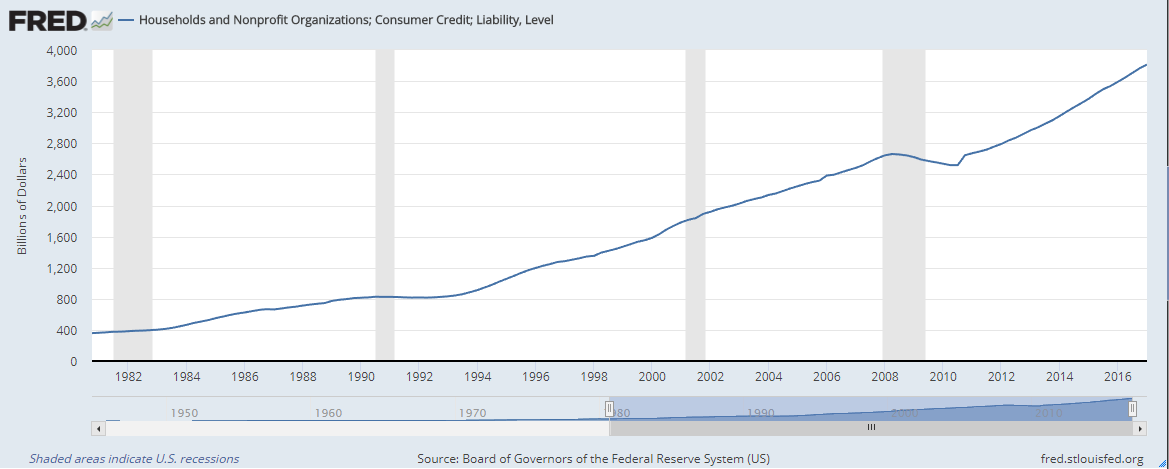
Average credit scores have eclipsed their October 2006 peak, hitting 700 this year. It is interesting to see that US consumer debt levels are at all-time highs, however debt service is at a low. Debt service is one's mortgage, car, installment, and credit card debt as a percentage of income. Check out the charts below:

Consumer credit:


Debt service:


These two charts demonstrate just how much interest rates matter (and why owning a home isn't quite as unaffordable as the home price indices suggest). If you want to see what determines how Fair Issac (of FICO fame) determines your score, here is a handy chart. The single best thing one can do is make timely payments, followed by reducing the amount they owe. 


Friday, July 28, 2017

Morning Report: More on housing afforability

Vital Statistics:

Last Change
S&P Futures  2465.3 -7.0
Eurostoxx Index 378.7 -3.6
Oil (WTI) 49.1 0.0
US dollar index 86.2 -0.3
10 Year Govt Bond Yield 2.30%
Current Coupon Fannie Mae TBA 102.93
Current Coupon Ginnie Mae TBA 103.81
30 Year Fixed Rate Mortgage 3.95

Stocks are lower this morning on overseas weakness. Bonds and MBS are flat. 

The advance estimate for second quarter GDP came in at 2.6%, in line with expectations. This is an increase from the first quarter estimate of 1.2%. Personal consumption increased 2.8%, while the price index increased 1% while the savings rate inched down. This should give the Fed the room to maintain interest rates at this level if they choose to do so.

The employment cost index rose 0.5% in the second quarter and is up 2.2% YOY. Wages and salaries increased 0.5% and benefit costs increased 0.6%. 

Consumer sentiment edged up in July, according to the University of Michigan survey. 

I had some questions yesterday regarding LIBOR and what happens to ARMs once it is gone in 2021? The short answer is that nobody knows for sure. The US will probably migrate to some other repo rate to set short term rates. Perhaps once LIBOR goes away, there will be a LIBOR reference rate which is pegged to whatever short term rate is being used and will move at a constant spread to that rate. 

I was discussing housing affordability a couple days ago and talked about mortgage payments as a function of income over time. I showed that the post bubble days hit 40 year lows (at least) and that we are still well below historical levels. The issue with that analysis is that it ignores the tax effects of the mortgage interest deduction, which really mattered in the late 70s / early 80s when tax rates and interest rates were much higher. Up until the mid 80s, the marginal tax rate for the median income was between 22% and 24%. It has been 15% ever since. Also, when interest rates were much higher, the vast majority of your payments for the first few years went to interest, not principal - in fact when mortgage rates were 17%, 99% of your first year's payment went to interest. Today, that number is much lower, and even ticked below 70% in 2012. Check out the chart below:


That chart also speaks to how much quicker one can build equity simply by paying their mortgage on time. Back in the 70s / 80s, you were probably lucky to have enough home price appreciation and principal paid to cover your closing costs if you moved after a few years. Today, you have both strong home price appreciation and a higher principal payment percentage. This helps emphasize how real estate is a great way to build wealth. 

Here is the chart comparing the gross percentage of income that a mortgage payment consumed over time and also the tax effected percentage: As you can see, it is pretty linear, and we are still in a great position now compared to 30 years ago. 


Friday, May 26, 2017

Morning Report: GDP revised upward

Vital Statistics:

Last Change
S&P Futures  2410.5 -3.0
Eurostoxx Index 380.9 -1.3
Oil (WTI) 48.8 -0.2
US dollar index 88.8
10 Year Govt Bond Yield 2.24%
Current Coupon Fannie Mae TBA 102.6
Current Coupon Ginnie Mae TBA 103.81
30 Year Fixed Rate Mortgage 4

Stocks are lower this morning on no real news. Bonds and MBS are flat.

Today looks to be a relatively slow day ahead of the 3 day weekend. Markets should become illiquid in the afternoon as most of the Street will be on the LIE by noon. 

First quarter GDP was revised upward from 0.7% to 1.2% in the second revision. Consumption was revised upward from 0.3% to 0.6% and PCE inflation was revised downward from 2.3% to 2.2%. The upward revision to GDP was higher than expected. The current tracking estimate for Q2 is around 3%. 

Durable Goods orders fell in April by 0.7%. The core index, which excludes volatile transportation components fell 0.4%. Capital Goods expenditures were flat. 

Corporate profits rose 12% YOY in the first quarter. For all of the handwringing over stock market valuations, the underlying profitability of Corporate America remains strong. 

After this morning's data, the implied probability of a June hike increased 4% to 87%.

Larry Summers is sticking with his "secular stagnation" thesis. He views secular stagnation as the defining economic issue of our times, and believes that governments aren't doing enough fiscally to break out of it. He does raise a good point about the early 2000s: We had a huge trade deficit, tax cuts, super-easy credit, mid single digit unemployment, and a housing bubble. Yet all the economy could manage was adequate growth. With all of that stimulus, the economy should have been roaring like the late 90s. What is causing secular stagnation is anyone's guess, but his Rx is infrastructure spending and fiscal stimulus. 


Friday, April 28, 2017

Morning Report: Q1 GDP weakest in 3 years

Vital Statistics:

Last Change
S&P Futures  2387.0 1.0
Eurostoxx Index 386.8 -1.0
Oil (WTI) 49.5 0.6
US dollar index 89.7
10 Year Govt Bond Yield 2.32%
Current Coupon Fannie Mae TBA 102.63
Current Coupon Ginnie Mae TBA 103.68
30 Year Fixed Rate Mortgage 3.98

Stocks are flattish after first quarter GDP misses expectations. Bonds and MBS are down.

First quarter GDP came in at 0.7%, which was lower than the 1.1% consensus forecast. A decline in spending on motor vehicles was a drag on Q1, which has been weak the past several years for some reason. The personal consumption expenditure (the inflation measure most preferred by the Fed rose 2.4%, which is higher than their target rate. This was the highest reading in several years, which means the Fed might be forced to move even though growth is weak. The savings rate jumped from 5.5% to 5.7%, which means consumers are still using increases in income to pay down debt. Inventory depletion and a drop in government spending, along with weak consumption were the main drivers. Note that this is just the advance estimate, and will be revised twice in the next month. 


Employment costs rose 2.8% annualized in the first quarter, according the BLS. Wages and salaries rose 2.5% while benefit costs increased 2.2%. We have been seeing a gradual tick up in this index, however wages are still well off their pre-crisis historical trend. 


Trump's tax plan was short on specifics, but it certainly looks like wealthier residents in high tax states will feel it the most. Killing the state and local tax deduction has been fraught with risk, but given that it will largely affect the blue states it might have a chance. Eliminating the mortgage interest deduction will be a poison pill, IMO. Will tax reform hit the residential real estate market? Probably not, as tight inventories are the dominant factor driving pricing right now. 

The homeownership rate ticked down slightly in the first quarter to 63.6% from 63.7% in the fourth quarter. It looks like it is on the rebound, however the first time homebuyer really needs incomes to rise in order to catch an asset that is increasing 7% a year. More starter home construction would help too, but multi-fam seems to be the interest of builders. Vacancy rates are largely flat MOM and YOY. 


The Chicago Purchasing Manager Index rose last month, while consumer sentiment slipped. 

Housing Wire's home price forecast for the rest of the year. Overall, looking at 3.5% growth, with a range of anywhere from 1% to 10%.