A place where economics, financial markets, and real estate intersect.
Showing posts with label XHB. Show all posts

Wednesday, August 29, 2018

Morning Report: Q2 GDP revised upward

Vital Statistics:


LastChange
S&P futures2899-1
Eurostoxx index385.810.35
Oil (WTI)69.080.55
10 year government bond yield2.88%
30 year fixed rate mortgage4.55%

Stocks are flat this morning after GDP came in better than expected. Bonds and MBS are down small. 

Mortgage Applications fell 1.7% last week as purchases fell 1% and refis fell 3%. This is despite a drop in rates. 

Second quarter GDP was revised upward to 4.2% from 4.1%, which was higher than the street estimate of 4.0%. The main revisions were to consumption (downward) and fixed residential investment (upward). Inventories were a drag on GDP, which means that we should see a bump to Q3's numbers. The GDP price index was also revised up a touch, from 1.8% to 1.9%. All of this provides a good environment for the Fed to ease back from the zero bound. 


Mortgage bankers made $580 per loan in the second quarter, an increase from $118 in the first quarter. Banks cut costs aggressively (dropping production costs per loan by about $1,000) however declining volumes offset that, and this turned out to be the weakest quarter since the MBA began keeping records in 2008. That $580 represents a profit of 21 basis points per loan, which was a drop form 24 bps a year ago. Fee income dropped to 341 bps from 370 in the first quarter. Refis continue to decline, with purchases accounting for 81% of all volume. 

Here is something wild. Last night, there were no trades in the JGB market (the world's second largest bond market). This is the 7th time this has happened this year. The Bank of Japan basically controls the market, and trading has dried up. We live in interesting times, at least if you are a central banker. 

Pending Home sales fell 0.7% in July, according to NAR. Lawrence Yun, NAR chief economist, says the housing market’s summer slowdown continued in July. “Contract signings inched backward once again last month, as declines in the South and West weighed down on overall activity,” he said. “It’s evident in recent months that many of the most overheated real estate markets – especially those out West – are starting to see a slight decline in home sales and slower price growth.” Blame tight supply, which has driven up prices to unaffordable levels. 

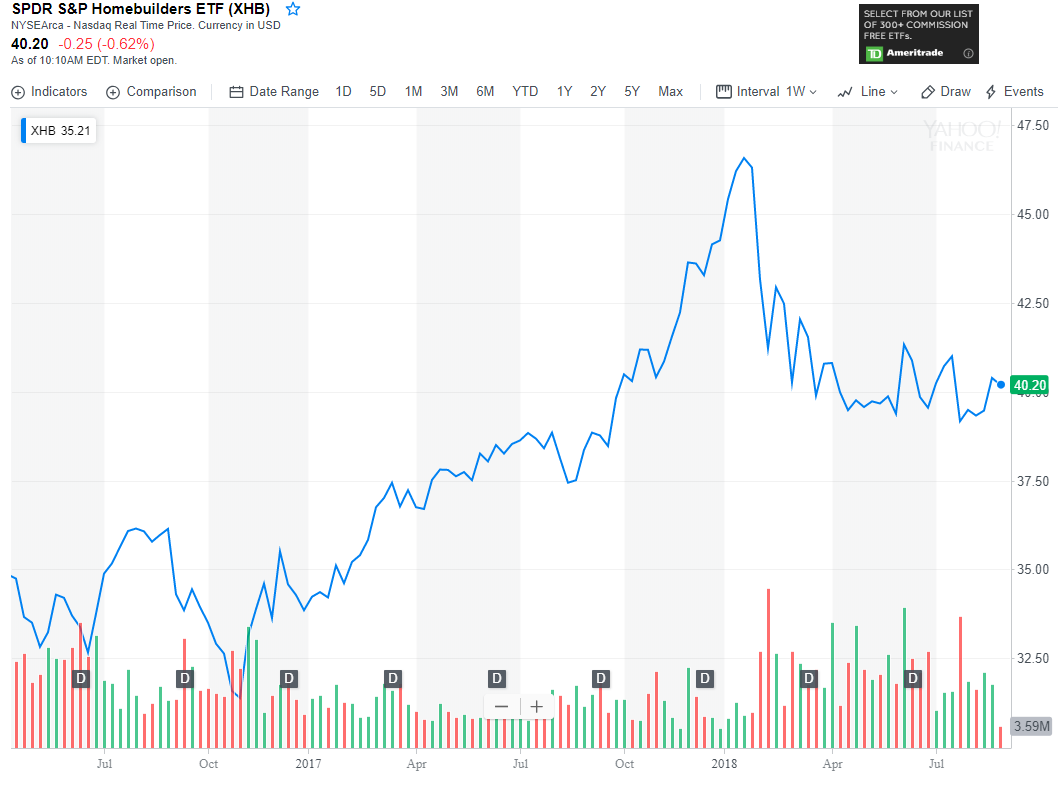
The housing slowdown has not been lost on the stocks of the homebuilders, who despite strong earnings (and an incredibly strong stock market) are down 14% YTD. At some point, the sector will be unable to rely on increasing ASPs and will have to pump up volume to show growth. Despite the clear need for new housing, especially at the starter level, builders seem content to meter their growth and plow excess cash into buybacks. 

Thursday, November 10, 2016

Morning Report: Will the late teens resemble the early 80s?

Vital Statistics:

Last Change
S&P Futures  2167.5 7.0
Eurostoxx Index 340.7 0.9
Oil (WTI) 44.9 -0.3
US dollar index 89.3 0.4
10 Year Govt Bond Yield 2.09%
Current Coupon Fannie Mae TBA 103
Current Coupon Ginnie Mae TBA 104
30 Year Fixed Rate Mortgage 3.75

Stocks are higher this morning as the markets come to grips with a Trump presidency. Bonds and MBS are down.

Strangely, the 2 year bond is trading at 90 basis points, while the consensus is that we should be getting 2 more rate hikes by late 2018. This is even more surprising given the action in the 10 year. A poll of economists and strategists indicates that the Fed will still raise rates in December. Given the market action since Trump won, the Fed has every excuse to do so. 

Trump will not ask for Janet Yellen's resignation. That said, she probably won't get re-nominated when her term expires in 2018. Donald Trump has been critical of Fed policy, insisting that rates should be higher than where they are now. 


Mortgage Applications fell 1.2% last week as purchases rose 1% and refis fell 3%. The average interest rate for a 30 year fixed conforming mortgage rose 2 basis points to 3.77%. 

Initial Jobless Claims fell to 254k last week as employers continue to hang onto their workers. 

The conventional wisdom that a Trump victory would be stock bearish, bond bullish, and dollar bearish turned out to be dead wrong, at least initially. Stocks were destroyed in the wee hours of Wednesday morning, and then had a massive turnaround during the day. Legendary investor Carl Icahn probably singlehandedly cleaned up the sellers overnight, pouring $1 billion into S&P 500 futures. He was probably up about 6% on that trade by noon. 

The overall feel to the tape is "risk on" and investors are definitely selling bonds to buy stocks. Financials, Pharma, and construction stocks led the charge. Surprisingly the homebuilder ETF (XHB) underperformed. Ultimately a Trump presidency should be bullish for housing, so I am surprised at the stock action. 

The more I think about it, the more I believe the Trump presidency will most closely resemble the early Reagan Administration economically. Reagan took over after a long period of economic underperformance and shocks to the economy. Early in his administration, the Fed was tightening while fiscal policy loosened. I think that dynamic is going to play out here, as the government cuts taxes, deregulates, and spends on infrastructure while the Fed methodically raises interest rates off the zero bound. Ultimately the Fed has an easier job here, as they don't have the raging inflation problem and any recession will probably be more mild since we are already at full employment. I don't see a deep recession like 81-82 in the cards, however we are certainly in uncharted territory with monetary policy worldwide. The biggest difference is that that the early 80s ended a secular bear market in bonds that began in the 50s. This time around, we are ending a secular bull market in bonds that started in the early 80s. Note that we are also probably at the beginning of a secular bull market in stocks, just like the early 80s.


Thursday, March 26, 2015

Morning Report - No we are not in another housing bubble

Vital Statistics:

Last Change Percent
S&P Futures  2045.4 -8.4 -0.41%
Eurostoxx Index 3634.4 -49.6 -1.35%
Oil (WTI) 50.31 1.1 2.24%
LIBOR 0.269 0.003 0.96%
US Dollar Index (DXY) 96.69 -0.288 -0.30%
10 Year Govt Bond Yield 1.95% 0.02%
Current Coupon Ginnie Mae TBA 102.7 -0.1
Current Coupon Fannie Mae TBA 102 -0.1
BankRate 30 Year Fixed Rate Mortgage 3.82

Stocks are lower worldwide as the Saudis bomb Shiite rebels in Yemen and the semiconductor sector gets taken tot the woodshed. Bonds and MBS are down. The bombing in Yemen is putting a bid under oil.

In economic data this morning, initial jobless claims fell to 282,000 last week from 291,000. This is the lowest reading in 5 weeks. The Markit US Composite PMI rose to 58.5 in March, while the US Services PMI rose to 58.6. Bloomberg Consumer Comfort rose to 45.5 last week. 

It is looking like the Germanwings crash was a deliberate act. Note that the new security measures designed to keep bad guys out of the cockpit can also keep the good guys out if the bad guy is already inside. 

Senator Richard Shelby suggests that GSE reform probably isn't happening this year. And since the following year is an election year, you can probably forget about anything happening until 2016 at the earliest. 

In the "what passes for analysis" category, CNN wonders if we are in another bubble. Why? Because the Homebuilder ETF (XHB) is back at 2007 levels. Setting aside the idea that ETF valuations can somehow predict where real estate prices go, bubbles require a mindset on the part of buyers and bankers that the asset in question is "special" and cannot fall in value. We will never see another housing bubble in the US, but our grandkids may at some point. 

Ara Hovnanian weighs in on the housing market and the state of the first time homebuyer.