A place where economics, financial markets, and real estate intersect.
Showing posts with label TRID. Show all posts

Friday, April 27, 2018

Morning Report: GDP comes in better than expected

Vital Statistics:

Last Change
S&P futures 2673 -1.5
Eurostoxx index 384.63 0.87
Oil (WTI) 67.92 -0.27
10 Year Government Bond Yield 2.97%
30 Year fixed rate mortgage 4.62%

Stocks are flat this morning after GDP came in higher than expected. Bonds and MBS are up small. 

The advance estimate of first quarter GDP came in at 2.3%, higher than the Street 2.0% estimate. Consumption rose 1.1%, in line with estimates, and inflation was lower than expected at 2%. In many ways, this was a Goldilocks type report, with decent growth and controlled inflation. The savings rate increased to 3.1%, compared to 2.6% in the fourth quarter. One note of caution: the first quarter has had some quirky measurement issues over the past several years, which has subjected it to subsequent upward revisions. The tax cuts will probably have a similar effect this time around. 


Wage inflation is picking up, according to the Employment Cost Index which rose 0.8% for the quarter and is up 2.7% for the year. Wages and salaries increased 0.9% compared to 0.5% in the previous quarter. For the Fed, these two reports this morning are great news. Real wage growth (2.7% increase in wages and salaries less a 2% increase in inflation) with moderate growth and inflation. 

Consumer sentiment slipped from March's 14 year high in April to a still strong 98.8.

The Fed Funds futures are predicting a 93% chance of another 25 basis point hike at the June meeting. 

North and South Korea pledged to de-nuclearize the peninsula and declare an official end to the 50 year old Korean War. 

Freddie Mac is introducing its 3% down product for first-time homebuyers - HomeOne. With an Affordable Second, the LTV can go as high as 105%. Income and geographic limits are intended to reach a broad audience. 

Friday, February 16, 2018

Morning Report: Robust housing starts

Vital Statistics:

Last Change
S&P Futures  2736.0 2.0
Eurostoxx Index 379.5 3.0
Oil (WTI) 61.4 0.1
US dollar index 82.9 0.2
10 Year Govt Bond Yield 2.88%
Current Coupon Fannie Mae TBA 103.591
Current Coupon Ginnie Mae TBA 103.688
30 Year Fixed Rate Mortgage 4.44

Stocks are higher on no real news. Bonds and MBS are up.

Housing starts came in at 1.326MM annualized, better than expectations. Building permits hit 1.4 million - a 10 year high. Both numbers beat estimates by about 100k, a sizeable amount. The jump was largely in the volatile multi-family segment however. Single family starts were up about 4% YOY. That said, we are still well under the historical averages for starts, which was about 1.5 million units a year during from the 60s through the 90s and early 00s. 

NAR welcomed the housing starts number: "Terrific news on housing starts in January with a solid 10% gain. This rise in single-family housing construction will help tame home price growth, and the increase in multifamily units should continue to help slow rent growth. The large gain in housing starts in the West (10.7%) is especially welcomed, as that region has been facing acute housing shortages. Ultimately, there is still large room for improvement given the fact overall housing inventory is currently near historic lows." This is from Lawrence Yun, Chief Economist.

Import prices rose 1% MOM and are up 3.6% YOY. Energy prices were a big driver of the increase, however if you pull out energy, import prices were up just under 2% YOY. The dollar has been selling off for about a year now, and that is adding pressure to import prices which will flow through to inflation. 

Consumer sentiment improved in early February despite the stock market sell-off. Sentiment came in at about December levels and is at post-recession highs. 

Changes may be coming to TRID disclosure. The House passed a measure requiring more detail in how insurance fees are disclosed. The bill would amend language in the Real Estate Settlement Procedures Act (RESPA) to require the itemization of “all actual charges” and not just the itemization of “all charges.” The bill also would amend RESPA to require that ‘‘Charges for any title insurance premium disclosed on [the TRID rule] forms shall be equal to the amount charged for each individual title insurance policy, subject to any discounts as required by State regulation or the title company rate filings.’’. Thus, the bill would not permit the current approach to the disclosure of title insurance premiums under the TRID rule, and would require that the amounts disclosed for title insurance reflect the actual premium charges, including any discounts.

Thinking of relocating? Here is how much you need to make to be able to qualify for a mortgage on the median house in that MSA. The highest? San Jose, where the median home price is 1.3 million and you need to make just under a quarter of a million. 

Tuesday, February 21, 2017

Morning Report: Average home sizes falling again

Vital Statistics:

Last Change
S&P Futures  2352.8 4.8
Eurostoxx Index 372.3 1.3
Oil (WTI) 54.5 1.1
US dollar index 91.4 0.4
10 Year Govt Bond Yield 2.45%
Current Coupon Fannie Mae TBA 102.045
Current Coupon Ginnie Mae TBA 103.17
30 Year Fixed Rate Mortgage 4.14

Stocks are up as the markets have a risk-on feel to them. Bonds and MBS are down small. 

Not much in economic data, but we will have Fed-speak all day, with Kashkari, Harker, and Williams speaking. 

The highlight of the week should be the FOMC minutes coming out tomorrow. Other than that, we get existing home sales, new home sales and the FHFA House Price Index. 

The initial look at February manufacturing indicates a slight decline as the flash PMI falls from 55.5 to 54.3. Services came in at 53.9. 

Goldman is tempering their enthusiasm for the S&P 500, warning that investors are overly optimistic. They predict the stock market will go nowhere for the rest of the year. Their concerns are that the good earnings from Q4 won't continue, and any sort of fiscal stimulus out of Washington will take time to be felt. 

Despite TRID's best efforts, about 17% of consumers end up being surprised by the existence of closing costs when getting a mortgage. The surprises run the gamut of points, up front MI and taxes. 

Speaking of taxes, here are some tax tips from NAR

House Financial Services Committee Chairman Bill Huizenga (R-MI) has introduced a bill to clarify the definition of points and fees under the CFPB QM rule by excluding title charges and escrowed T&I. 

We are starting to see average new home sizes decline, which is a function of the emerging first time homebuyer and the market for starter homes. After the real estate bust, the only segment of the new home market that was working was the ultra-luxury end, which meant that average home sizes increased. From 2009 to 2015, it looks like average square footage increased by close to 400 square feet. Now, as more and more starter homes and townhouses are being built, we are seeing average size decline again. Strange to think that the luxury end is the only part that works in the aftermath of a bust, but there you go. 


One often overlooked advantage to buying versus renting: The fact that making your mortgage payment every month amounts to a savings plan as you pay down your principal on your loan. 

The Despot reported better than expected earnings this morning as more and more people do work on their homes. Comps were up 6.3%. 

Thursday, January 21, 2016

Morning Report: Markets stabilizing?

Vital Statistics:

Last Change Percent
S&P Futures  1867.0 12.1 0.65%
Eurostoxx Index 2955.6 73.0 2.53%
Oil (WTI) 28.26 -0.1 -0.32%
LIBOR 0.624 0.001 0.08%
US Dollar Index (DXY) 99.59 0.497 0.50%
10 Year Govt Bond Yield 1.97% -0.01%
Current Coupon Ginnie Mae TBA 104.8
Current Coupon Fannie Mae TBA 104.2
BankRate 30 Year Fixed Rate Mortgage 3.72

Stocks are up this morning as ECB President Mario Draghi hinted at further easing in March. Bonds and MBS are up small.

ECB President Mario Draghi said that downside risks to the economy have increased and the ECB could possibly reconsider its policy stance in March. The ECB did leave rates unchanged this month.

Stocks got pummeled yesterday with the Dow down 566 points in early afternoon. Markets then turned around on no real news and rallied into the close to cut the losses for the day. The 10 year got down to 1.94%. 

The carnage in the markets is largely a result of how leveraged the entire system is. In many cases, people are selling to cover margin calls. Margin selling begets margin selling, which is why markets are so skittish these days. 

Initial Jobless Claims rose to 293k from 283k yesterday. This is the highest level in 6 months. The Philthy Fed Index improved from -10.2 to -3.5. 

We are starting to see more announcements about job cuts. Johnson and Johnson is cutting 3,000 and Barclay's is letting 1,200 go as it pulls out of Asian markets. 

TRID rules are increasing the time it takes for a closing by 5 days, according to the National Association of Realtors. We could see the effect of that tomorrow when they report existing home sales. November's numbers were depressed, so people will be looking for a rebound in December. 


Wednesday, December 23, 2015

Morning Report: New Home Sales rise

Vital Statistics:

Last Change Percent
S&P Futures  2041.9 6.0 0.29%
Eurostoxx Index 3276.9 62.6 1.95%
Oil (WTI) 36.7 0.6 1.55%
LIBOR 0.593 0.008 1.30%
US Dollar Index (DXY) 98.38 0.141 0.14%
10 Year Govt Bond Yield 2.26% 0.02%
Current Coupon Ginnie Mae TBA 104
Current Coupon Fannie Mae TBA 102.9
BankRate 30 Year Fixed Rate Mortgage 3.83

Stocks are up this morning on no real news. We are entering the end of year "window dressing" time where a lack of volume allows people to move stocks (at least temporarily). Bonds and MBS are down.

Big economic data dump today and tomorrow with the holiday shortened week. 

Mortgage Applications rose 7.3% last week as purchases rose 4.1% and refis rose 10.8%. 

New Home Sales rose to 490k from a downward revised 470k in November. Consumer sentiment rose to 92.6 from 91.8. 

Personal Income and Personal Spending rose 0.3% last month. 

PCE Inflation was flat on a month-over-month basis and up 0.4% YOY. The core PCE, which strips out volatile commodity related items rose 1.3% YOY. Inflation remains nowhere to be found. 

Durable goods orders were flat in November, and fell 0.1% ex-transportation. Capital Goods shipments (a proxy for business capital expenditures) fell 0.5%. The Street was looking for 0.5%, so that is a big miss. 

Existing Home Sales fell by a lot yesterday, which was largely attributed to TRID issues. Look at the chart - biggest drop in a long time - certainly since 2010 when the homebuyer tax credit expired. 


Tuesday, December 22, 2015

Morning Report: TRID starts showing up in the housing numbers

Vital Statistics:

Last Change Percent
S&P Futures  2016.9 2.0 0.10%
Eurostoxx Index 3210.1 -2.9 -0.09%
Oil (WTI) 36 0.2 0.53%
LIBOR 0.586 0.016 2.81%
US Dollar Index (DXY) 98.19 -0.176 -0.18%
10 Year Govt Bond Yield 2.21% 0.02%
Current Coupon Ginnie Mae TBA 104.2
Current Coupon Fannie Mae TBA 103.2
BankRate 30 Year Fixed Rate Mortgage 3.84

Stocks are higher this morning on hopes of more stimulus for the Chinese economy. Bonds and MBS are down small.

Existing Home Sales fell to an annualized rate of 4.76 million from 5.32 million last month. This was the lowest level in 19 months. Guess what the reason was. The median home price rose to $220,300. which is up 6.3%. Housing inventory is 2.03 million homes, which represents a 5.1 month inventory at the current sales pace.

The third revision to Q3 GDP came in at 2%, a slight downward revision from the 2.1% second estimate. A lower inventory estimate drove the revision. Personal consumption was 3%, while the core PCE index (the Fed's preferred measure of inflation) rose at an annualized rate of 1.3%. Consumption has been depressed for so long that eventually consumers are forced to replace worn out clothes and cars. The average age of a car in the US recently hit a record at 11.5 years, and this is behind the stronger auto sales (along with cheap and easy financing). 

Housing contributed 15.3% of GDP in the third quarter, about where it was in the fourth quarter. This is well below the historical levels and is explained by the drop in homebuilding. Given that the excesses of the bubble were worked off years ago, inventories are tight, and the Millennial generation is even bigger than the Boomers we will see a pick-up at some point, which should last years. Remember, housing starts averaged 1.5 million a year from the 1960s to 2002 (pre-bubble years). Since 2002, we have averaged under 1.2 million. When you take into account population growth, the deficit grows even larger.


House prices rose 0.5% in October, according to the FHFA. On a year over year basis, they rose 6.1%. Looking at the chart, it seems like we are back at the heights of the index set in 2007 or so.The Mountain states led the charge, while the Northeast fell a little.

Cash sales as a percentage of home sales fell to 32.5% of all sales from 35.9% a year ago, according to CoreLogic. REO sales tend to be most likely to be cash sales. You can see on the map below the range of percentages based on the state. It looks to correlate most closely with the foreclosure pipelines. 


More TRID horror stories. Borrowers are having to pay for longer lock periods, and lenders are scrambling to meet closing deadlines. Hopefully this will be a memory in a few months. Non-agency remains an even bigger problem as investors are taking a zero defects stance on TRID and not buying loans. 

Friday, December 18, 2015

Morning Report: Lennar beats

Vital Statistics:

LastChangePercent
S&P Futures 2023-17.20.78%
Eurostoxx Index327133.01.03%
Oil (WTI)35.450.481.46%
LIBOR0.5320.0061.13%
US Dollar Index (DXY)97.77-0.165-0.17%
10 Year Govt Bond Yield2.20%-0.02%
Current Coupon Ginnie Mae TBA104.2
Current Coupon Fannie Mae TBA103.4
BankRate 30 Year Fixed Rate Mortgage3.93


Markets are lower this morning on no real news. Bonds and MBS are up small.

Homebuilder Lennar reported better than expected earnings this morning with average sales prices up 6%, a decrease in gross margins and an increase in new orders of 10%. CEO Stuart Miller sees a "slow and steady" housing market improvement. He said the Fed rate hike was a sign of confidence in the economy.

Rob Chrisman discussed how TRID is impacting the non-agency markets. quotes one lender: "I see in your commentaries lots of feedback about TRID. Something else is happening and it appears, absent some quick changes in philosophy, the effect could be both a complete seizure of non-agency lending and possibly some firm's very existence could be put in jeopardy. My firm has had 100% of the jumbo loans that we've sent for delivery rejected by our buyers. Yes - 100% - and we're talking nearly 50 loans so far. Why? Every one had a TRID violation. Does that mean my firm screwed up and is alone on this? No. Two of the firms we sell to say they have purchased ZERO loans so far in December. ZERO. Why? Same reason. None of them were TRID compliant. The TRID rule is so severe, and so open for interpretation, and because the buyers are taking a zero defect approach - it is near impossible to manufacture a perfect loan from a TRID perspective. It's clear to anyone in our business what could happen next. If I were a warehouse lender - I'd immediately cease funding non-agency loans. Same goes for any correspondent lender who doesn't want a giant pipeline of unsaleable production. We're large enough to be able to fund our unsaleable pipeline with cash. But many firms are not. What happens to a firm that has $5 million of cash on hand when its warehouse lender asks them to buy $6 million of jumbos (literally only 5 to 8 loans) off of the line? Game, set, match. Because TRID only affected new applications after 10/3 - the fundings are now only starting to be affected. This crisis is about to get real..."

Of course the reaction from the CFPB lawyers will undoubtedly be that these stooges in the mortgage banking industry just can't get their act together.  And they better start expanding credit in our targeted areas, or else!

The latest CoreLogic Market Pulse is out: They expect home prices to reach their previous peaks in mid 2017. Note that the FHFA House Price Index (which covers a subset of homes) is pretty much already there.

Fannie Mae reports that lenders are easing credit standards in their latest mortgage lender sentiment survey. They hope that easier credit will help mitigate the drop in home affordability. 

Monday, November 23, 2015

Morning Report: Existing Home Sales fall

Vital Statistics:

Last Change Percent
S&P Futures  2087.8 -0.9 -0.04%
Eurostoxx Index 3442.2 -10.3 -0.30%
Oil (WTI) 41.45 -0.4 -1.07%
LIBOR 0.382 0.005 1.19%
US Dollar Index (DXY) 99.82 0.255 0.26%
10 Year Govt Bond Yield 2.28% 0.02%
Current Coupon Ginnie Mae TBA 103.9
Current Coupon Fannie Mae TBA 103.2
BankRate 30 Year Fixed Rate Mortgage 3.92

Markets are flattish on no real news. Bonds and MBS are down.

Existing Home Sales fell to 5.36 million in October, according to the NAR. The median home price increased to 219,600. Inventories remain tight, with the number of homes for sale dropping to 2.14 million, which is about 4.8 month's worth of inventory. 6 - 6.5 months is considered a balanced market. It doesn't appear that TRID had much of an effect on home sales, at least so far. 

The Chicago Fed National Activity Index increased to -.04 in October. This is the third negative reading in a row, and the 8th  negative month this year. Note we will get the second revision to Q3 GDP this week. 

We have another big merger today, with Pfizer buying Allergan in a $160 billion inversion trade. Pfizer will become an Irish corporation for tax purposes, although the headquarters will remain in New York. 

The S&P 500 is approaching its highs yet corporate profits have fallen in the second and third quarters. Blame low oil prices and the strong dollar. Of course stocks are forward-looking instruments and investors may be focusing on 2016 and beyond. Still, it is one more reason to be cautious about stocks as the Fed begins a tightening cycle. I would venture to say the majority of the traders on the Street have never witnessed one. Goldman is forecasting a 100 basis point hike in rates in 2016

The back-to-school shopping season was somewhat disappointing for retailers as consumers remain cautious. Retailers continue to be promotional (retail-speak for "cutting prices") and WalMart will begin its Cyber Monday sales prices on Sunday night. 

Part of the issue with consumption is that homeowners are not tapping their home equity, at least the way they did before. Home equity loans are about 25% of what they were in 2007. While mortgage lenders are being more conservative, auto loans are now the new credit bubble. When you can get an 8 year car loan for about the same prices as a 30 year fixed rate mortgage, you know this has the potential to end very badly. 

Friday, November 20, 2015

Morning Report: TRID is not affecting closing times, at least not yet.

Vital Statistics:

Last Change Percent
S&P Futures  2084.6 5.4 0.26%
Eurostoxx Index 3460.5 11.6 0.34%
Oil (WTI) 40.1 -0.4 -1.09%
LIBOR 0.37 0.003 0.68%
US Dollar Index (DXY) 99.21 0.217 0.22%
10 Year Govt Bond Yield 2.24% -0.01%
Current Coupon Ginnie Mae TBA 104.1
Current Coupon Fannie Mae TBA 103.5
BankRate 30 Year Fixed Rate Mortgage 3.83

Markets are higher this morning after Mario Draghi said the ECB will do what it must to raise inflation as quickly as possible. Bonds and MBS are rallying.

Fed Heads Bullard and Dudley will be speaking on the economy today. 

Weakness in Europe has pushed bond yields down overseas, and the relative value trade should start having an effect here. The German Bund has been incredibly volatile over the past year, trading in a range of 5 basis points to 106 basis points. It currently stands at 47 basis points and looks to be headed lower. 

Home sales stalled in October, according to Redfin. Sales increased 0.3%, and the median house price rose about 6% year over year. TRID probably played a role in bumping up September's numbers and lowering October's. 


Americans are re-leveraging. Household debt reached $12 trillion in the third quarter according to the New York Fed. Mortgage debt, student loan debt and auto loans all increased. The delinquency rate for student loans is an astounding 11.6%. 


Credit is loosening somewhat, according to Ellie Mae. Average FICO scored dropped a point to 722. Note that time to close a loan (46 days) did not increase in October, so if TRID is slowing down closings, it isn't apparent in the numbers, at least not yet. 

Monday, October 12, 2015

Morning Report: Slow news day

Vital Statistics:

Last Change Percent
S&P Futures  2006.1 -1.3 -0.06%
Eurostoxx Index 3239.8 -10.6 -0.32%
Oil (WTI) 49.42 -0.2 -0.42%
LIBOR 0.321 0.001 0.31%
US Dollar Index (DXY) 94.74 -0.075 -0.08%
10 Year Govt Bond Yield 2.09% 0.00%
Current Coupon Ginnie Mae TBA 104.8
Current Coupon Fannie Mae TBA 104.1
BankRate 30 Year Fixed Rate Mortgage 3.89

Markets are flattish on no real news. Bonds and MBS are closed for the Columbus Day holiday.

No economic data this morning, but we will get a slew of data this week. We will get retail sales on Wednesday, which promises to be a big number as well as inflation data. On Friday we get some big manufacturing data. 

Earnings season kicks off in earnest this week with many of the big banks reporting. We will hear from JP Morgan after the close. 

The CFPB is going after mandatory arbitration clauses in banking and credit cards. This will make it easier for consumers to sue. Separately, the SEC is reducing its use of in-house administrative law judges, which critics have said gives it a "home court" advantage.

The rental market has been on fire, and has been doing much better than the single family construction market. Is that about to change? As the Millennials age, they will become house buyers. The demographics are changing, and 2015 may be the known as "peak rentals" The one thing our economy needs more than anything right now is more housing construction. We have a shortage, and housing construction employs a lot of people with jobs that pay good wages. The difference between 1.2 million housing starts and 2 million in terms of growth is very meaningful. 

Last week the House passed a bill that would extend a hold-harmless period for TRID until February. Its fate in the Senate is unclear. The CFPB has said it will take into account whether a company is making a good faith effort to comply but does not support a hold harmless period. 

Shortest honeymoon ever. After agreeing to a deal to stop developing nuclear weapons in exchange for the lifting of sanctions, Iran tested a long range ballistic missile with a range of around 800 miles, potentially violating the agreement signed in July.


Wednesday, October 7, 2015

Morning Report - Mortgage Applications shoot up 25%

Vital Statistics:

Last Change Percent
S&P Futures  1982.1 13.5 0.69%
Eurostoxx Index 3246.3 26.2 0.81%
Oil (WTI) 49.38 0.9 1.75%
LIBOR 0.323 -0.004 -1.19%
US Dollar Index (DXY) 95.43 -0.028 -0.03%
10 Year Govt Bond Yield 2.07% 0.03%
Current Coupon Ginnie Mae TBA 104.8
Current Coupon Fannie Mae TBA 104.4
BankRate 30 Year Fixed Rate Mortgage 3.84
Stocks are higher this morning as commodities rally, pulling along emerging markets with them. Bonds and  MBS are down.

Mortgage applications rose 25% last week as purchases rose 27%% and refis rose 24%. That is a surprising result given the Bankrate 30 year fixed rate mortgage rose 5 basis points last week. Some think that it was partly TRID-driven

Janet Yellen's intention to let the labor market run hot for a few years has some Fed watchers worried. The criticisms range from fears about creating another 1970s - style inflationary environment to worries about the Fed's credibility. We are in uncharted territory with the amount of control central banks worldwide are exercising over the economy. FWIW, I do not see much in the way of similarities between the 1970s and today: capacity utilization is low, and the chance of an oil shock is pretty remote. In fact we have the exact opposite situation. The inflation hawks make the case that monetary policy acts with such a lag that the die may already be cast for higher inflation (a similar argument that some of the global warming alarmists make with respect to CO2 in the atmosphere) The other point is more valid: the evidence that the Fed can influence wages and labor force participation is weak and the Fed is setting up unrealistic expectations that could damage its credibility down the road. 

Of course the other unintended consequence of ZIRP is the pressure it puts on pension funds. That probably is going to be the next crisis. We saw this movie before, in the 1950s. 

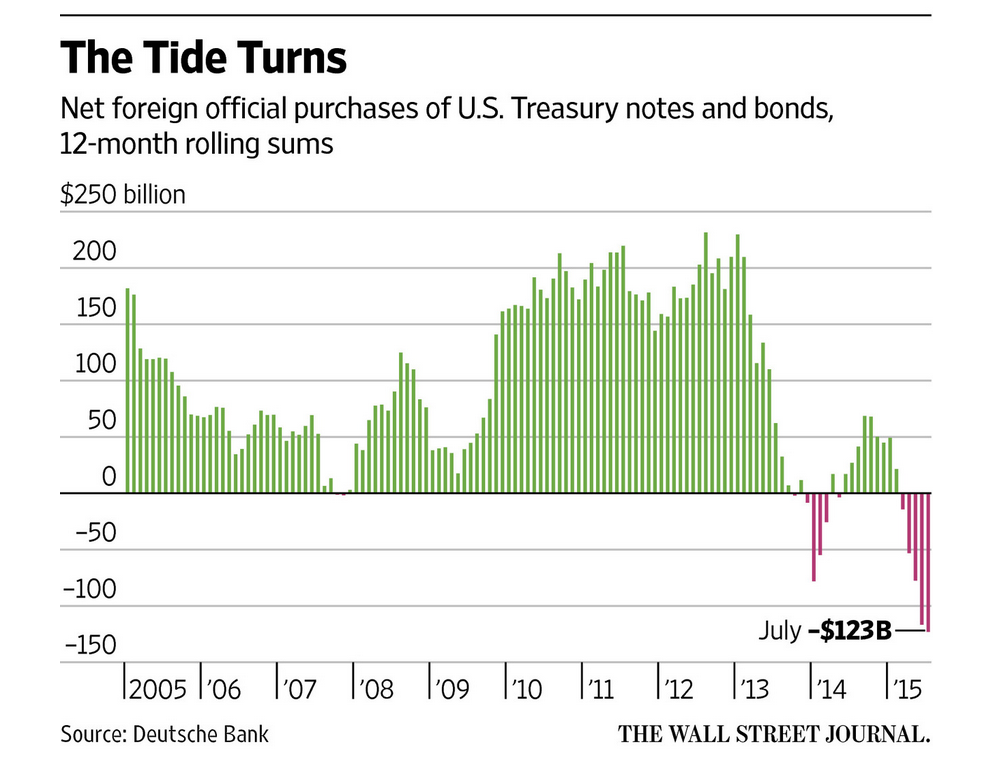
As we contemplate higher interest rates, foreigners are selling US Treasuries. While economic fundamentals will ultimately matter more than foreign fund flows, but it looks like foreign investors are cutting exposure ahead of higher rates. It probably will affect volatility, as primary dealers have pulled back market-making activity and Treasury markets have become less liquid in general. 


Now that house prices are approaching the 2006 peaks, some are arguing that we are in another bubble. Affordability is down as wages have gone nowhere, and scarcity is driving up prices. FWIW, bubbles are psychological phenomenons - the occur when buyers (and lenders) believe an asset is special and cannot go anywhere but up. We won't see another housing bubble in the US, but our grandkids might. 

Tuesday, October 6, 2015

Morning Report: TRID to delay closings

Vital Statistics:

Last Change Percent
S&P Futures  1973.7 -1.0 -0.05%
Eurostoxx Index 3212.5 22.1 0.69%
Oil (WTI) 46.68 0.4 0.91%
LIBOR 0.327 0.003 0.96%
US Dollar Index (DXY) 95.9 -0.207 -0.22%
10 Year Govt Bond Yield 2.07% 0.01%
Current Coupon Ginnie Mae TBA 104.8 -0.1
Current Coupon Fannie Mae TBA 104.4 0.0
BankRate 30 Year Fixed Rate Mortgage 3.84

Stocks are unchanged this morning as there is very little in the way of economic data / earnings to move markets. Bonds and MBS are down small.

The trade deficit widened to 48 billion in August as the strong dollar cuts exports and increases imports.

The IMF cut is global growth estimate to 3.1% from 3.3%. Blame weak commodity prices.

Economic Optimism improved markedly according to Investors Business Daily and TIPP Online. Many of these consumer confidence indices are merely inverse gasoline price indices. Falling gasoline prices makes people happy. 

Home prices rose almost 7% in August on a year-over-year basis, according to CoreLogic. They are forecasting home price appreciation around 4.3% over the next year. 

Bill Gross sees another 10% downside in stocks and is recommending sitting in cash for a while. His point is that corporate profits are flatlining as commodity prices hurt earnings in the energy patch and the strong dollar hurts manufacturers. Expect more layoffs in the energy sector. Bill Gross called the Chinese sell-off earlier this year as well as the German Bund sell off. 


TRID is expected to delay closings as people get adjusted to the new rules.  CFPB Chairman Richard Cordray says the agency will give lenders who are making good-faith efforts to comply with the new rules a break: "Nobody believes that market participants are going to be trying to abuse consumers here; they're trying to change their systems. So we'll be diagnostic and corrective, not punitive, and there will be time for them to work to get it right and not be perfect on the first day," said Cordray. We'll see if that actually happens. 

What to the French do well? Food, lifestyle, and labor strife. Propose job cuts and you are likely to get the shirt ripped off your back by an angry mob.

Friday, July 31, 2015

Morning Report: Employment Cost inflation lowest since 1982

Vital Statistics:

Last Change Percent
S&P Futures  2106.2 2.5 0.12%
Eurostoxx Index 3580.9 -2.9 -0.08%
Oil (WTI) 47.92 -0.6 -1.24%
LIBOR 0.297 0.000 0.00%
US Dollar Index (DXY) 96.63 -0.928 -0.95%
10 Year Govt Bond Yield 2.20% -0.06%
Current Coupon Ginnie Mae TBA 104.1 0.2
Current Coupon Fannie Mae TBA 103.4 0.1
BankRate 30 Year Fixed Rate Mortgage 3.93

Stocks are flattish after the Employment Cost Index comes in lower than expected. Bonds and MBS are flat

The Employment Cost Index rose 0.2% in the second quarter, the lowest increase since BLS started keeping track, which began in 1982. On a 12-month basis, employment costs are up 2%. This number includes salaries and benefits, so we still have wage inflation barely keeping up with inflation in general. Given the low ECI and falling commodity prices in general, the Fed has an excuse not to move in September. Bonds rallied hard on the announcement. 

Note that in 1982, the US was in the worst recession since the Great Depression. This was the recession caused by Paul Volcker's tightening to conquer 1970s inflation. It also corresponded to the first wave of globalization, where US industry had to deal with international competition for the first time since WWII. Given that we are 5 years into an expansion, that number sticks out like a sore thumb. 

The ECI is just another demonstration of the strange state of affairs in the US labor market. People who have jobs are keeping them, as demonstrated by the multi-decade lows in initial jobless claims and the low unemployment rate. Job openings are at the highest since BLS started keeping track in 2001. The labor force participation rate is the lowest since the late 1970s and wage inflation is the lowest since 1982. Definitely a perplexing environment for the Fed to navigate. 

Lost in the GDP data from yesterday, GDP growth was revised downward from 2.3% to 2% for the years 2011-2014. Apparently the government overestimated what government spending was during those years. Kind of funny, actually.

The Chicago Purchasing Manager's index rose to 54.7 in July from 49.4. 

Consumer Confidence slipped slightly in July, according to the University of Michigan Consumer Sentiment Survey. The current conditions index rose while the expectations index fell. The number of people who say their household financial situation is worse than a year ago ticked up to 29%. Interesting to say the least, given that these consumer confidence indices often are influence by gasoline prices and those have been falling as oil has been taken to the woodshed. 

Speaking of oil prices, both Exxon-Mobil and Chevron reported weaker than expected numbers this morning, and both stocks are getting whacked. Surprisingly, D.R. Horton (who has a lot of TX exposure) has not seen any evidence of this hitting homebuyer demand. 

Chart: West Texas Intermediate:


Ocwen missed earnings estimates and the stock is down about 16% on the open. The UPB of its servicing portfolio fell 26% to $322 billion. They unveiled a new plan to cut costs as their assets fall. 

The House Financial Services Committee passed a "hold harmless" period for TRID, which basically says the CFPB won't be able to enforce TRID and impose penalties until Feb 1 2016, provided the issuer is making a good-faith effort to comply with the regulation. There is a competing bill in the Senate which would have a shorter period, ending on Jan 1. The CFPB has already delayed the implementation once. 


Thursday, June 18, 2015

Morning Report - FOMC data dump

Vital Statistics:

Last Change Percent
S&P Futures  2095.3 6.1 0.29%
Eurostoxx Index 3406.8 -22.0 -0.64%
Oil (WTI) 60.37 0.4 0.75%
LIBOR 0.286 0.003 1.06%
US Dollar Index (DXY) 93.68 -0.615 -0.65%
10 Year Govt Bond Yield 2.32% 0.00%  
Current Coupon Ginnie Mae TBA 101.1 0.0
Current Coupon Fannie Mae TBA 99.77 0.1
BankRate 30 Year Fixed Rate Mortgage 4.06

Markets are higher this morning after the FOMC statement was more dovish than people had feared. Bonds and MBS are flat

The Consumer Price Index rose .4% in May, slightly below expectations. Ex-food and energy, it rose 0.1%. On a year-over-year basis, the CPI is flat, while the core index is up 1.7%. Inflation remains below the Fed's target.

Initial Jobless Claims fell to 267,000 last week, another strong number. Real average weekly wages increased 2.3%.

The Bloomberg Consumer Comfort Index rose to 40.9 from 40.1 last week, while the Philly Fed index rose to 15.2 and the Index of Leading Economic Indicators was flat at 0.7%. 

The FOMC statement was pretty much non-eventful, as was the press conference. The action was in the projection materials and the revised economic forecasts. As expected, the Fed took down its forecast for 2015 GDP growth to a range of 1.8% - 2.0% versus 2.3% - 2.7%. The Fed has been consistently high in its estimates for GDP growth ever since the crisis. It is almost as if they are trying to shoehorn an post asset bubble economy into a garden-variety Fed-driven recession model. Unemployment was taken up as well, from a range of 5.0%-5.2% to 5.2%-5.3%. We will have to wait until the minutes come out to understand the rationale there. Inflation is still expected to come in around .7%. Overall, the economy is still fragile and the Fed wants to take it slow.

The dot graph lowered the median projection for the Fed Funds rate to .7% from .9% at the March FOMC meeting, and the trajectory of interest rates is expected to be lower. 

The CFPB is delaying the deadline for TRID until October, in order to give the industry a little more time. Sounds like the industry lobbied for this extension pretty hard. 

We are getting a woman on the $10 bill by 2020. Jack Lew is asking for suggestions. Of course no one will be using cash anymore by 2020 anyway, and you can put whoever you want on the wallpaper on your phone...