A place where economics, financial markets, and real estate intersect.
Showing posts with label FHA. Show all posts

Thursday, February 1, 2018

Morning Report: FOMC statement and government pricing

Vital Statistics:

Last Change
S&P Futures  282.0 -2.8
Eurostoxx Index 395.1 -0.4
Oil (WTI) 65.4 0.7
US dollar index 83.3 0.0
10 Year Govt Bond Yield 2.74%
Current Coupon Fannie Mae TBA 103.591
Current Coupon Ginnie Mae TBA 103.688
30 Year Fixed Rate Mortgage 4.19

Stocks are down small on earnings. Bonds and MBS are down small as well. 

The Fed left interest rates unchanged, and released a somewhat hawkish statement. The changes weren't really all that major, and they confirmed what we pretty much already know: the economy continues to strengthen, the labor markets remain tight, and inflation remains below target. The Fed Funds futures pushed up their probability estimate for a March hike by a few percentage points and the market is now handicapping a 77% chance of a 25 basis point hike in March. Bonds sold off a couple of basis points on the statement. 

Initial Jobless Claims came in at 230,000 last week, a drop from the downward-revised 231,000 the week prior. Meanwhile, the Challenger Job cuts report increased to 44,500 as retailers shed jobs after the holidays. 

Nonfarm productivity declined 0.1% last quarter as output increased 3.2% and hours worked increased 3.3%. Unit labor costs increased 2.0%, with compensation increasing 1.8%. Manufacturing productivity really took off, as output increased over over 7% while hours worked increased 1.5%. Productivity is incredibly hard to actually measure, but it is the secret to increasing living standards. A lack of productivity growth since the late 90s has acted to depress wage growth. 

Some loan officers have noticed that FHA and VA pricing has been lousy lately higher up in the rate stack. This is an industry-wide phenomenon. For some reason, there is not much demand for the higher coupon Ginnie Mae TBAs, which means borrowers aren't seeing the pickup in lender credit they would expect as they go up in rate. It has been so bad, that we are seeing state downpayment assistance programs suspend pricing until things work themselves out. I am not sure what is driving this - the knock on Ginnie mortgage backed securities has always been prepayment speeds. Between FHA streamlines and VA IRRRLs, the prepay speeds have been much higher than trading desks have been modeling. Ginnie has issued new guidance and regulations in order to prevent serial refinancings. So far, that hasn't translated into demand for the higher note rate TBAs. Loan officers, don't be afraid to contact us with pricing issues - we will do what we can to try and help. 

The DC appeals court yesterday affirmed the CFPB's structure, largely along partisan lines. The Court also lowered the penalty to PHH, so it isn't necessarily a given that this will go to SCOTUS. 

Construction spending increased 0.7% MOM and is up 2.6% YOY. Residential construction was up 0.4% MOM and 6.2% YOY. 

D.R. Horton's affordable home program targeted to the first time homebuyer is growing, and it seems like this segment is becoming the focus of the homebuilding industry, especially since demand in general (and tax law changes) are affecting the luxury end of the market. D.R. Horton started the unit in 2014, and was bucking the trend in building of buying up urban land and focusing on renters. Instead, they bought land in the less-fashionable suburbs and focused on entry-level homes. You are starting to see other builders attack this segment as well. 

Friday, December 8, 2017

Morning Report: Movement on housing reform

Vital Statistics:

Last Change
S&P Futures  2647.0 7.8
Eurostoxx Index 389.5 3.1
Oil (WTI) 57.6 0.9
US dollar index 87.3 0.0
10 Year Govt Bond Yield 2.38%
Current Coupon Fannie Mae TBA 102.625
Current Coupon Ginnie Mae TBA 103.625
30 Year Fixed Rate Mortgage 3.92

Stocks are higher after a strong jobs report. Bonds and MBS are down small. 

Jobs report data dump:
  • Payrolls up 228,000
  • Two month revision up 38,000
  • Unemployment rate 4.1%
  • Labor Force participation rate 62.7%
  • Average hourly earnings up 2.5% YOY
Overall a strong report, and probably good for the markets. The modest wage inflation will keep the Fed cautious, while slack continues to be taken up. That said, a rate hike is more or less a certainty next week. We probably won't see any big pickup in wage inflation until the labor force participation rate gets back up to the 65% - 66% level. 


In other labor news, job cuts increased slightly according to outplacement firm Challenger, Gray and Christmas, while initial jobless claims fell to 236,000. 

Consumer sentiment edged up slightly in November, according to the University of Michigan survey. 

Congress came up with a deal to keep the lights on for two weeks. The debt ceiling will have to be raised at some point, although the government can use cash on hand and other extraordinary measures to get through until Spring. Expect to see some conservative Republicans to balk at additional spending, which makes bringing aboard some Democrats a necessity. A deal with Democrats will involve an equal hike in defense and non-defense spending as well as some sort of immigration deal. A shutdown doesn't seem to be in the cards, at least not yet. 

With all the commotion going in Washington right now, it is easy to forget about housing reform, but Bob Corker and Mark Warner are beginning to come to a consensus over what the future of housing finance should look like. Fannie and Fred will remain, but the government will make it easier for new competitors to enter the market. Jeb Hensarling of Texas has moderated his stance on government guarantees of mortgages, which helped move things along. The goal is to keep the mortgage market more or less as-is for borrowers, while increasing competition in the secondary market and bolstering taxpayer protection. In one wrinkle, the Fannie Mae preferred shareholder might get some sort of recovery. The prefs were up 24% on the news, while the common fell slightly. 

The FHA will no longer insure mortgages for properties that include Property Assessed Clean Energy (PACE) assessments."FHA can no longer tolerate putting taxpayers at risk by allowing obligations like these to be placed ahead of the mortgage itself in the event of a default," said U.S. Department of Housing & Urban Development (HUD) Secretary Dr. Ben Carson. "Assessments such as these are potentially dangerous for our Mutual Mortgage Insurance Fund and may have serious consequences on a consumer's ability to repay, or when they attempt to refinance their mortgage or sell their home." Dave Stevens of the MBA also welcomed the decision.

Ginnie Mae is tightening requirements on securitizations in order to combat the high prepayment speeds that the securities have been experiencing. They targeted VA IRRRLs last year by making IRRRLs that refinanced a loan less than 6 months old ineligible for standard securitizations. Ginnie is now including cash-out refis and FHA streamlines as well. Some MBS strategists have predicted that this will weaken demand for the higher coupon Ginnie Mae securities, which would mean that borrowers get less and less of a pickup in points for going higher in rate.

Wednesday, November 8, 2017

Morning Report: FHA prepay speeds higher than expected

Vital Statistics:

Last Change
S&P Futures  2584.3 -2.5
Eurostoxx Index 393.8 -0.9
Oil (WTI) 57.1 -0.2
US dollar index 87.8 -0.1
10 Year Govt Bond Yield 2.31%
Current Coupon Fannie Mae TBA 102.875
Current Coupon Ginnie Mae TBA 103.938
30 Year Fixed Rate Mortgage 3.95

Stocks are flat this morning on no real news. Bonds and MBS are down. 

Mortgage applications were flat last week as the purchase index increased 1 percent and the refi index decreased 1%. The average 30 year fixed rate mortgage fell 4 basis points to 4.18%. 

The House and Senate continue to work on tax reform. Here is the latest state of play. Biggest difference between the House and Senate is the state and local tax deduction, where the Senate bill excludes all state / local / property taxes, and the House bill which allows some deductions. Lawmakers are still working on a way to prevent companies from taking advantage of lower-tax jurisdictions overseas to shelter income. Accountants and lawyers are still getting their arms around what the proposals actually entail, and as expected it will be complicated. The estate tax will probably survive in some form in the Senate. 

Capital One (What's in your wallet?) is exiting the mortgage origination business. “These businesses are in a structurally disadvantaged position, given the challenging rate environment and marketplace,” Sanjiv Yajnik, president of financial services at Capital One, said in a memo to employees. “These factors do not allow us to be both competitive and profitable for the foreseeable future.”

Mortgage Credit availability decreased slightly in October, especially on the jumbo side of things, according to the MBA. This indicates that lenders are tightening standards a little. The index has been pretty much flat for the past year. 

Many FHA borrowers are refinancing into conventional mortgages, which has resulted in higher prepayment speeds than expected for FHA loans. This is low-hanging fruit for loan officers: home prices appreciation has been strong enough for most MSAs that someone who did a 3.5% down FHA loan a few years ago may be eligible for a 20% conventional and no longer have to pay MI. Serious delinquencies fell for FHA loans as well, from 5% to 4.3%. 

Thursday, May 25, 2017

Morning Report: FOMC minutes mildly dovish

Vital Statistics:

Last Change
S&P Futures  2407.0 5.0
Eurostoxx Index 391.9 -0.5
Oil (WTI) 50.7 -0.7
US dollar index 88.7
10 Year Govt Bond Yield 2.25%
Current Coupon Fannie Mae TBA 102.6
Current Coupon Ginnie Mae TBA 103.81
30 Year Fixed Rate Mortgage 4

Stocks are higher after the FOMC minutes came in a little more dovish than expected. Bonds and MBS are up as well.

The FOMC minutes were mildly bond-positive, as they introduced doubts as to the scope and timing of fiscal stimulus: "Many participants continued to view the possibility of expansionary fiscal policy changes in the United States as posing upside risks to their forecasts for U.S. economic growth, although they also noted that prospects for enactment of a more expansionary fiscal program, as well as its size, composition, and timing, remained highly uncertain." One member (probably Neel Kashkari) also wanted to wait until inflation was closer to 2% before making any further moves. Bonds rallied a few basis points on the minutes, and the implied probability of a June hike dropped from 83% to 78% briefly before returning to 83%. 

Initial Jobless Claims rose slightly to 234k from 233k last week, which is still extraordinarily low. This is 4 straight weeks below 240. The last time that happened was 1973. When you consider that (a) we still had the Vietnam draft at that point, and (b) population growth since then (52%) it is an extraordinary number. 

Delinquencies rose in April, according to Black Knight Financial Services. The calendar may have played a part however as April ended on a Sunday, and most of the DQs were early-stage. The number fell to 4.08%, a drop of 3.58% YOY. 

Given the big increase in home price appreciation, many FHA loans done at a 97 LTV might have enough new equity to refinance into conventional loans with no PMI. Loan officers, take a look at your past deals, and if you have a FHA loan, take a look to see if you can save some money. 

Thursday, January 19, 2017

Morning Report: Housing starts rise

Vital Statistics:

Last Change
S&P Futures  2265.3 -1.3
Eurostoxx Index 362.4 -0.7
Oil (WTI) 51.6 0.5
US dollar index 91.9 0.0
10 Year Govt Bond Yield 2.45%
Current Coupon Fannie Mae TBA 103
Current Coupon Ginnie Mae TBA 104
30 Year Fixed Rate Mortgage 4.13

Stocks are lower this morning after the ECB decision to stand pat. Bonds and MBS are lower after Janet Yellen's bullish comments on the economy and some decent data this morning.

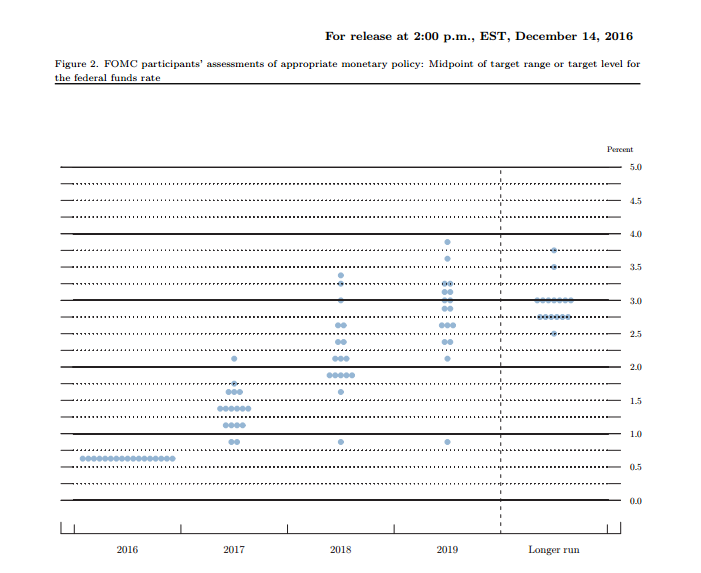
Janet Yellen spoke yesterday, saying the economy was close to the Fed's target, which warrants gradual rate hikes. Here are her prepared remarks. "That said, as of last month, I and most of my colleagues--the other members of the Fed Board in Washington and the presidents of the 12 regional Federal Reserve Banks--were expecting to increase our federal funds rate target a few times a year until, by the end of 2019, it is close to our estimate of its longer-run neutral rate of 3 percent." That should have been a relative uncontroversial statement, given that roughly corresponds with the December dot plot. However, bonds sold off anyway.


Housing starts rose to 1.23 million in December from 1.1 million in November. Building Permits were flat at 1.21 million. Starts beat expectations while permits missed. Multifam drove the increase in starts, while single fam fell slightly. 


Initial Jobless Claims fell to 234k last week nearly matching a low set in November. You would have to go back to the early 1970s (during the Vietnam war draft) to see claims this low. That is even more impressive when you factor in population growth. Employers are hanging onto their employees. 

The Philadelphia Fed survey jumped last month as conditions improved for manufacturing. New orders and employment drove the increase. 

Treasury Secretary nominee Steve Mnuchin travels to Capitol Hill today for his confirmation hearing. The questions will largely center on his role in the IndyMac turnaround, as well as his recommendations for the GSEs. He will also be asked about his comments regarding possible tax reform and whether the rich will receive an "absolute tax cut." 

The nonbank share of FHA lending is worrying some in Washington. As banks have retreated from FHA lending, nonbank lenders like Quicken and Freedom have taken up the slack. GNMA is conducting a push to lure banks back into the business. 

The Fed's Beige Book survey was a non-event. Most districts described their employment markets as "tight" and expansion as "modest."

One bond investor thinks the bond bull market is still going to last a while longer. Why? The velocity of money has hit a floor since the Great Recession and hasn't picked up. The velocity of money measures how many times a dollar has been "turned over" in different transactions. It peaked at 2.2x in 1997 and is currently sitting around 1.4x. This has been driven by the Great American Deleveraging which began with the bursting of the real estate bubble - income growth has been nonexistent, and the marginal dollar has been saved, not spent. The lower velocity is keeping a lid on inflation. 


Bridgewater CEO Ray Dalio sees a mild bear market in bonds as economic growth picks up. He views the nascent populism being exhibited worldwide as a threat to multinational corporations and emerging economies. How politicians direct and engage that populism is going to be critical. Note that the Fed is addressing some of this by launching a new think tank: The Opportunity and Inclusive Growth Institute, which will be run by Minneapolis Fed head Neel Kashkari. Of course there isn't much the Fed can do to address income inequality, however quantitative easing has largely benefited those that own assets, who are primarily rich. 

Here is a good article on determining how much house you can afford. 

Friday, December 2, 2016

Morning report: Unemployment and wages fall

Vital Statistics:

Last Change
S&P Futures  2190.0 -2.0
Eurostoxx Index 338.2 -3.0
Oil (WTI) 51.1 0.0
US dollar index 91.5 -0.2
10 Year Govt Bond Yield 2.41%
Current Coupon Fannie Mae TBA 103
Current Coupon Ginnie Mae TBA 104
30 Year Fixed Rate Mortgage 4.14

Markets are flattish as investors digest the jobs report. Bonds and MBS are flat as well. 

Jobs report data dump:
  • Payrolls up 178k vs 170 expected
  • Unemployment rate 4.6% vs. 4.9% expected
  • Labor force participation rate 62.7% vs 62.8% expected
  • Average hourly earnings down .1% vs expectations of a .2% increase
On balance, the report was mixed. While the drop in the unemployment rate was encouraging, the drop in wages was a disappointment. The drop in the labor force participation rate didn't help things either. This probably doesn't change the Fed's thinking for the FOMC meeting in a couple of weeks. 

The bright spot in the report: the big drop in the unemployment rate for the age 25-34 cohort. Good news for the mortgage and real estate industry. Anecdotally, college applications are falling markedly, which indicates people are getting jobs as opposed to going back to school. Overall, it means the first time homebuyer is in better shape. 

Bonds initially rallied on the report, but have given back their gains. 

Bill Gross isn't buying the big rally in stocks lately. “An investor should move to cash and cash alternatives, such as high probability equity arbitrage situations,” Gross, who runs the $1.7 billion Janus Global Unconstrained Bond Fund, said. “Bond durations should be far below benchmarks.” The bond duration comment means he sees interest rates continuing to rise. In his view, equity investors are putting too much stock in things like regulatory reform and fiscal stimulus, as demographics and low productivity are likely to remain the more dominant forces in the market, which is ultimately bearish for stocks. Separately, investors pulled $4.1 billion out of taxable bond funds last week

HUD has raised the FHA loan limit to $424,100. following the increase from Fannie Mae. 


Wednesday, August 3, 2016

Morning Report: Buy real estate, sell stocks and bonds

Vital Statistics:

Last Change
S&P Futures  2149.0 -4.0
Eurostoxx Index 334.7 -1.0
Oil (WTI) 39.9 0.4
US dollar index 86.3 -0.5
10 Year Govt Bond Yield 1.54%
Current Coupon Fannie Mae TBA 103.3
Current Coupon Ginnie Mae TBA 104.2
30 Year Fixed Rate Mortgage 3.51

Stocks are lower this morning as oil and emerging markets move lower. Bonds and MBS are down.

Mortgage Applications fell 3.5% last week as purchases fell 2% and refis fell 4%. Rates fell a lot last week, but the biggest move was on Friday, so perhaps we'll catch up this week. 

The ADP payrolls report shows 179k jobs were created in July. Friday's jobs report is looking for an increase of 185k. The number to watch on Friday isn't so much payrolls, it is the increase in average hourly earnings. 

Shades of the bubble years: Over 50% of all listings in San Francisco and Seattle end up selling for over the listing price. In Washington state, there is 2 month's worth of inventory for sale and in California it is 2.5 months. A balanced market is 6.5 months. 

Once bitten, twice shy. 2010 marks the peak of the foreclosures from the bubble years, and next year, the foreclosure black mark drops off their credit reports. So far, we are only seeing a gradual return to the real estate market.   Many borrowers are unaware that FHA is more forgiving than other programs - you can apply for a loan after 3.5 years with only 3.5% down and a 580 FICO.

Bill Gross is on the "buy real assets" versus financial assets bandwagon. He dislikes stocks and bonds here, and prefers real estate and gold. With sovereign debt, you are making the bet that inflation is never, ever coming back. Governments seem to be coming to a consensus that more fiscal stimulus is needed, and that should be bond bearish. Theoretically, companies should be investing in property, plant and equipment instead of buying back their own stock. This isn't good for stock prices short term (and will drive the activists batty), but it is good long-term, provided these investments cover their cost of capital and aren't just empire-building exercises. You want stock prices supported by a future earnings stream, not artificially low interest rates. Problem is, capacity utilization is already pretty low, so there isn’t much need for additional PP&E, at least at the moment.

While the chart below is complicated, it does suggest that real assets will outperform financial assets going forward. For most people, the biggest "real asset" is their home. With rental inflation still high, having your mortgage payment set for 30 years isn't a bad deal at all. 


Note both Donald Trump and Hillary Clinton are advocating fiscal stimulus packages. Post-Brexit UK is looking at taking that route as well. FWIW, the bond market is betting nothing comes of it. 

Friday, January 22, 2016

Morning Report: Existing Home Sales rebound

Vital Statistics:

Last Change Percent
S&P Futures  1888.0 27.0 1.45%
Eurostoxx Index 3024.6 80.7 2.74%
Oil (WTI) 31.19 1.7 5.62%
LIBOR 0.621 -0.003 -0.48%
US Dollar Index (DXY) 99.34 0.279 0.28%
10 Year Govt Bond Yield 2.07% 0.03%
Current Coupon Ginnie Mae TBA 104.7
Current Coupon Fannie Mae TBA 104
BankRate 30 Year Fixed Rate Mortgage 3.71

Stocks are higher this morning as global markets rallied overnight. Bonds and MBS are lower. 

Generally a risk-on feel to the market, as stocks and commodities are rallying. Oil is back above $31 a barrel. 

The Chicago Fed National Activity Index improved to -.22 from -.36 last month, while the Index of Leading Economic Indicators fell 0.2%. 

Existing Home Sales rose 14.7% in December to 5.46 million. November's numbers were depressed by TRID, and it looks like much of those sales got bumped to December. This makes 2015 the best year for existing home sales since 2006. The median home price increased 7.6% to $224,100. Housing inventory continues to fall, and the 1.79 million homes for sale represents only a 3.8 month supply (6 - 6.5 months' worth constitutes a balanced market). First time homebuyers accounted for 32% of all sales, while all-cash transactions fell to 24%. 

The first time homebuyer is returning to the market, as FHA origination increases. After the FHFA cut FHA insurance premiums, we saw an increase in FHA origination. 

Things might run a little slow today as the Federal Government workers will leave at noon to get home before Snowmageddon II hits DC. Fannie Mae pricing will be the most affected.

As Ted Cruz and Donald Trump dominate the headlines and the polls, the big Wall Street donors are relatively sanguine

Wednesday, November 18, 2015

Morning Report: Cracks appearing in the credit markets.

Vital Statistics:

Last Change Percent
S&P Futures  2056.2 7.2 0.35%
Eurostoxx Index 3434.4 -17.5 -0.51%
Oil (WTI) 41.04 0.4 0.91%
LIBOR 0.364 0.001 0.14%
US Dollar Index (DXY) 99.57 -0.060 -0.06%
10 Year Govt Bond Yield 2.29% 0.02%
Current Coupon Ginnie Mae TBA 104.2
Current Coupon Fannie Mae TBA 103.2
BankRate 30 Year Fixed Rate Mortgage 3.86

Stocks are higher this morning on no real news. Bonds and MBS are down small.

Housing starts fell from a 1.19 million average pace in September to a 1.06 million pace in October. Building Permits rose from 1.1 million to 1.15 million. Multifam starts (which is notoriously volatile) drove the decline.

Mortgage Applications rose 6.2% last week as purchases rose 11.9% and refis rose 2.3%. 

We will get the FOMC minutes from the October meeting around 2:00 pm today. Not expecting any big bond market moves from it, but I wouldn't rule anything out. Here is a rundown on what the Street is looking for

Investors are starting to balk at the debt issues. The latest one was the financing for the Veritas / Symantec deal. Interestingly, the first indication we had a a problem during the financial crisis was a deal-related bond issue that was unsold. Not predicting another 2008, but just be aware. 

We are starting to see an increase in consumer credit defaults. Auto loan financing has gotten absolutely ridiculous, with companies offering 8 year car loans at 30 year fixed rate mortgage interest rates. Yet another unintended consequence of ZIRP. You can't blame consumers for taking the money - eventually all of this central bank money printing will make its way into the inflation numbers.

FHA is trying to ease rules to financing condos. Affordable housing advocates have been pushing for these changes.. Separately, Obama has threatened to veto legislation that would increase lender protections for non-QM loans. Guess FHA lending is going nowhere as the leader in low - income / low downpayment financing. 

Tuesday, September 22, 2015

Morning Report - Affordability drops again.

Vital Statistics:

Last Change Percent
S&P Futures  1931.0 -32.1 -1.64%
Eurostoxx Index 3086.5 -98.2 -3.08%
Oil (WTI) 45.43 -1.3 -2.68%
LIBOR 0.319 -0.026 -7.51%
US Dollar Index (DXY) 96.02 0.121 0.13%
10 Year Govt Bond Yield 2.15% -0.05%
Current Coupon Ginnie Mae TBA 104.3 0.1
Current Coupon Fannie Mae TBA 104 0.2
BankRate 30 Year Fixed Rate Mortgage 3.79

Stocks are lower this morning on overseas weakness and slumping commodity prices. Bonds and MBS are up. 

Slow news day. 

House prices rose  0.6% in July, according to the FHFA. They are now within 1.1% of their March 2007 peak. The Mountain states performed the best, while the Northeast performed the worst. 

The Richmond Fed Manufacturing Index fell in September. The strong dollar is hurting manufacturing. 

Scott Walker dropped out of the Republican presidential campaign yesterday. His staffers went to the Rubio campaign, which tells you how the pros are reading the tea leaves with respect to the Republican presidential nomination. 

Housing affordability is the lowest since 2008, as the median house price to median income ratio becomes stretched again. Affordability peaked between 2011 and 2013, however professional investors were the ones in a position to take advantage of it. Credit conditions continue to improve, but are still a fraction of what they were pre-crisis. 


The big banks are backing away from the FHA market, citing regulation and worries about giving loans to 520 FICO borrowers who only put 3.5% down. Separately, Ginnie Mae is worried about the fact that small independent mortgage bankers are filling the void left by the big banks. The industry is concerned that the big bank withdrawal is hurting the housing recovery.


Thursday, April 11, 2013

Morning Report - FHA needs a bailout

Vital Statistics:

Last Change Percent
S&P Futures  1583.0 0.3 0.02%
Eurostoxx Index 2664.1 2.5 0.09%
Oil (WTI) 94.28 -0.4 -0.38%
LIBOR 0.277 0.000 0.00%
US Dollar Index (DXY) 82.15 -0.387 -0.47%
10 Year Govt Bond Yield 1.79% -0.02%  
Current Coupon Ginnie Mae TBA 105.4 0.0
Current Coupon Fannie Mae TBA 103.7 0.2
RPX Composite Real Estate Index 190.8 0.5
BankRate 30 Year Fixed Rate Mortgage 3.56

Markets are flattish this morning after initial jobless claims came in lower than expected at 346k. They dropped 42k from last week, which spiked due to a seasonal adjustment related to the Easter holiday. Import prices fell half a percent on lower energy costs.Bonds and MBS are up.

Ever since the Bank of Japan announced its quantitative easing program, the market has been speculating that Japanese investors would enter the US market en masse and purchase Treasuries. There has been plenty of anecdotal evidence, but no real numbers to work with. Yesterday's 10 year auction didn't provide any either - the bid to cover ratio was 1.8 which was a little light.

FHA might need a little more money from the government. They have $30 billion of cash on hand and insure $1.1 trillion in loans. The Administration is projecting they might need another billion. It looks like it was the reverse-mortgage business that hammered them.

One of the interesting things about the latest FOMC minutes is that the dispersion of opinion regarding the future of QE appears to be widening. Some wanted to end QE now, while others not only want to continue it, they want to increase it. Nonvoting hawk Charles Plosser said the Fed would be wise to begin unwinding its balance sheet now.

SIFMA lays into Obama's proposed 2014 budget. It sounds like ETF investors could be in for a nasty surprise. They support the Administration's proposal to create bonds for financing infrastructure spending, but pretty much pan everything else. The proposal is loaded with new taxes on capital Suffice it to say, if you are an investor, the administration is gunning for you.

Tuesday, December 18, 2012

Morning Report - Reaching across the fiscal abyss

Vital Statistics:

Last Change Percent
S&P Futures  1431.2 4.2 0.29%
Eurostoxx Index 2637.4 9.4 0.36%
Oil (WTI) 87.76 0.6 0.64%
LIBOR 0.309 0.000 0.00%
US Dollar Index (DXY) 79.49 -0.077 -0.10%
10 Year Govt Bond Yield 1.78% 0.01%
RPX Composite Real Estate Index 191.7 0.1

Markets are higher this morning on optimism for a deal on the fiscal cliff. The President made some tax concessions to move closer to Speaker Boehner's position. The current account deficit increased more than expected to 107.5B.  Bonds continue to sell off, although it looks like the 10-year yield is bumping up against resistance. Certainly the announcement of QE4EVA was a case of "buy the rumor, sell the fact."  FWIW, that is my gut feeling about stocks and the fiscal cliff as well.

Both sides are coming closer on a deal to avoid the fiscal cliff.  Obama has lowered his revenue target to $1.2 trillion from $1.4 trillion and moved up the threshold for higher taxes to $400k from $250k.  $1.22 trillion will be cut in spending, from a variety of areas. The second biggest component of "savings" would be interest saved on debt that isn't going to be issued. Only in DC, would that count. It would also raise the debt ceiling enough to cover two years and the 2014 midterms.  On capital gains, the top tax rate would be 20%. Raising the medicare eligibility age from 65 to 67 seems to be off the table.  The sequester will be replaced by another sequester.  Extended unemployment benefits would continue.  One other surprising tidbit - the President wants to replace the expiring payroll tax cut with other stimulus measures such as infrastructure spending.  Which means everyone's taxes are going up, not just the rich.

The FHA plans to sell 40,000 non-performing loans over the next year to help improve its finances, which would make them the biggest seller of distressed paper, according to Louis Amaya of National Asset Direct.  One interesting wrinkle is that it is a back-door way to achieve principal mods.  Acting FHFA Chairman Ed DeMarco has steadfastly refused to allow FHA to reduce principal when modifying delinquent loans.  However, if they sell the loans, the investor is free to make whatever modification makes sense.  Under a U.S. Treasury program, investors can be reimbursed as much as 63 cents on the dollar for principal forgiveness.  Steve Schwartzman of Blackstone said they are "loading the boat." with delinquent loans, both for rentals and a macro bet on a housing recovery.

At 10:00 am, we will get the National Association of Homebulder's Housing Market Index.  This is a sentiment indicator of the homebuilders, which has been skyrocketing since housing bottomed earlier this year. According to Trulia, the Millenials are planning to ditch the rentals to buy a house in the next two years. As I have stated in other posts, household formation numbers have been highly depressed during the last 5 years, not because of demographics, but because of the economy. That represents a lot of pent-up demand that will be unleashed as the economy recovers.

Chris Whalen of Carrington discusses how the lending environment has changed and how the "regulatory arbitrage" favors the smaller independent lenders.  The downside is that mortgages will remain tough to get courtesy of the CFPB, especially in judicial states with high value properties.

Fun useless link of the day - put your own house in a snow globe.  h/t Rob Chrisman.

Wednesday, November 21, 2012

Morning Report Samuelson vs Krugman

Vital Statistics:

Last Change Percent
S&P Futures  1387.4 1.1 0.08%
Eurostoxx Index 2513.7 4.1 0.16%
Oil (WTI) 87.83 1.1 1.24%
LIBOR 0.312 0.001 0.32%
US Dollar Index (DXY) 81.03 0.070 0.09%
10 Year Govt Bond Yield 1.67% 0.00%
RPX Composite Real Estate Index 191 -0.4

Markets are flattish this morning after a earning miss from Deere and Greek debt negotiation efforts hit a snag.  Expect low volume today as investors pack up and head to Grandma's. Bonds are and MBS are down small.

Initial Jobless Claims came in at 410k.  Like last week, this is a Sandy-affected number and should be viewed accordingly. Mortgage applications fell 2.2%. University of Michigan Consumer Confidence dropped, and the index of leading economic indicators increased .2%.  Rising real estate prices are the driver of this.

Here are the highlights of the HUD report to Congress.  Aside from telling us what we already know (FHA is in deep trouble), there are also changes to the mortgage insurance program.  Insurance rates on FHA loans are going up, and borrowers will soon be charged mortgage insurance for the entire life of the loan, not just they typical 10-year period  L.Os take note - here is a good argument to get those borrowers off the fence - start the process now and get in under with wire.

Looks like the Feds are closing in on Stevie Cohen.  His healthcare PM allegedly made a quarter of a billion shorting Elan and Wyeth.  SAC Capital pays the highest commissions on the Street, by far.  They aren't doing it out of the kindness of their hearts. Of course his investors don't care - they know he is trading on inside information, but they are protected because they are limited partners.

Two arguments about the proper size of government and its effect on prosperity.

The negotiation between the baker's union and Hostess didn't last long.  Hostess is headed for liquidation.

Have a happy Thanksgiving.

Monday, November 19, 2012

Morning Report Paul Krugman mixes Twinkies and Marginal Tax Rates

Vital Statistics:

Last Change Percent
S&P Futures  1368.0 8.2 0.60%
Eurostoxx Index 2461.2 33.8 1.39%
Oil (WTI) 88 1.1 1.24%
LIBOR 0.312 0.000 0.00%
US Dollar Index (DXY) 81.06 -0.193 -0.24%
10 Year Govt Bond Yield 1.61% 0.03%
RPX Composite Real Estate Index 191.4 -0.4

Stocks are higher this morning on optimism the fiscal cliff can be averted.  The new buzzword in Washington is "constructive" The pattern lately has been a strong opening, and then a late-day sell-off. This is a holiday-shortened week, so you can expect lower volumes and not much activity.  We have a sparse economic calendar as well.  Bonds and MBS are down.

Even if we reach a deal with the fiscal cliff, taxes are going up next year.  Hurricane Sandy has been expected to lop a point or so off of 4Q GDP.  Between the two, we are probably looking at a flat-to slight GDP growth in Q113.  To add insult to injury, businesses are halting capital expenditures. While "constructive" is the operative word for Washington, "Uncertainty' is the buzzword for business. While it is certainly possible that a deal in Washington will remove the uncertainty, it feels like the business will simply find something else to fret about. The stock market is telling you that as well.  FWIW, Elmer Fudd is sanguine about the whole thing, saying a recession is a small price to pay to get our fiscal house in order.

HUD has announced some changes to help FHA get through its rough patch - the punch line is that FHA loans are about to get more expensive.  Fun fact:  FHA loans were about 2% of the market pre-boom.  Now they are 40%. The biggest changes involving borrowers will be an increase in the insurance premium, and removing the insurance cancellation program.

Redwood sold another $300 million of high quality jumbos last week, their sixth this year.  Two Harbors apparently is close to a securitization as well.  In the past two years, Redwood has securitized $900 million of jumbo mortgages.  To put that in perspective, in 2005 and 2006, private label issuance was $1.2 trillion. That said, the private label securitization market is coming back, slowly but surely.

Leave it to Paul Krugman to link Twinkies and marginal tax rates.

Friday, November 16, 2012

Morning Report: Bye Bye Twinkies

Vital Statistics:

Last Change Percent
S&P Futures  1354.8 3.5 0.26%
Eurostoxx Index 2457.6 -4.1 -0.17%
Oil (WTI) 86.49 1.0 1.22%
LIBOR 0.312 0.001 0.16%
US Dollar Index (DXY) 81.19 0.114 0.14%
10 Year Govt Bond Yield 1.59% 0.00%
RPX Composite Real Estate Index 191.4 -0.4

Markets are slightly higher this morning on no real news. The Gap and Foot Locker reported better than expected earnings. Industrial Production and Capacity Utilization both fell and were below expectations.  Those are warning flags. Bonds are down a few points and MBS are up.

The WSJ is reporting that the White House is in talks to replace the sequester with a smaller package of spending cuts and tax increases.  They are looking at cutting spending by $100 billion next year. This would take the pressure off and allow a more comprehensive deal in mid 2013.

FHA is almost broke.  They are hoping that an improving housing market and pending changes in its reserve fund will help it weather the storm without needing additional taxpayer funds.  I wouldn't rule out an increase in the G-fee at some point.

Bye-bye Twinkies, Ding Dongs and Ho Ho's.  Hostess has decided to liquidate instead of re-organize after a strike crippled operations.  18,500 workers will be let go.

The banking system continues to hemmorage jobs.  Over 160,000 in the last two years, and the fire / hire ratio is around 2.0.  I keep thinking that Wall Street tends to over-hire and over-fire, but they have been over-firing for years now.  As we have noted, there are capacity constraints.  Anecdotally, I have heard of one large bank that is refusing to take new customers on the trading side.