A place where economics, financial markets, and real estate intersect.
Showing posts with label Jobs report. Show all posts

Monday, April 9, 2018

Morning Report: Corporate credit spreads are widening

Vital Statistics:

Last Change
S&P futures 2621 15.3
Eurostoxx index 375.48 0.66
Oil (WTI) 62.54 0.48
10 Year Government Bond Yield 2.79%
30 Year fixed rate mortgage 4.43%

Stocks are up to start the week after a pretty lousy session on Friday. Bonds and MBS are flat.

The week after the jobs report is usually pretty data-light, however we will get the Producer Price Index and the Consumer Price Index on Tuesday and Wednesday. 

Friday's jobs report should allay investor fears that the Fed is behind the curve, at least according to PIMCO's Mohammed El-Arian. The light payroll number was probably weather-driven and the 3 month average is around 200k, which is solid and respectable. Wage growth came in as expected. Investors should take comfort that the Fed is probably not at risk of making a policy mistake due to an overheating economy. His view is that there is a 65 / 35 percent chance the Fed will stick the landing, meaning that economic growth will continue to more broadly expand and that markets will adapt to the higher volatility associated with normal monetary policy.

An example of higher volatility: corporate bond spreads. The end of 2017 was characterized by extremely low volatility in the stock and bond markets. When volatility falls, risk premiums contract. We saw corporate credit spreads reach pre-crisis levels. Since the beginning of the year, they are back to widening. Bad news for corporate bond funds, which have been beset by widening spreads and higher rates. 


The story of the past couple of years has been "subprime auto." The chickens are coming home to roost on this trade, and we are starting to see some subprime auto finance companies go bankrupt. Indeed, when you talk about the effects of low volatility in the market, things like this come to mind. With rates being held down by Fed actions, investors inevitably reach for yield. For a while, you could get a lower rate on a 6 year auto loan than you could on a 30 year fixed rate mortgage. This is insane when you take into account that the value of the collateral underlying a mortgage is 90% sure to increase over time, while the value of the collateral underlying the car loan is 100% sure to depreciate over time. That said, this won't be a repeat of 2008 economically. 

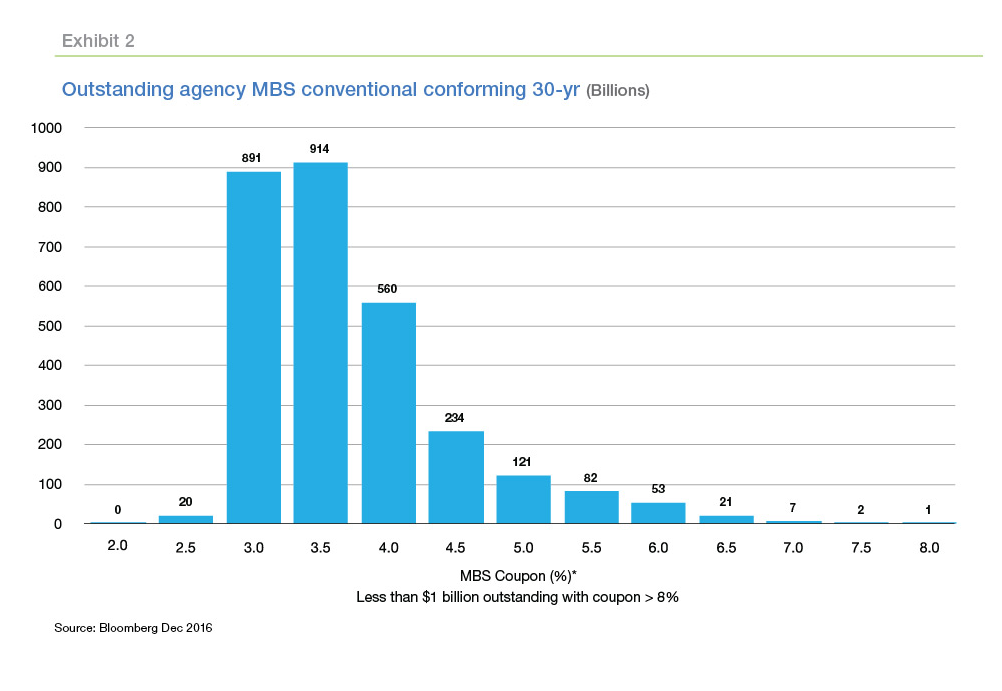
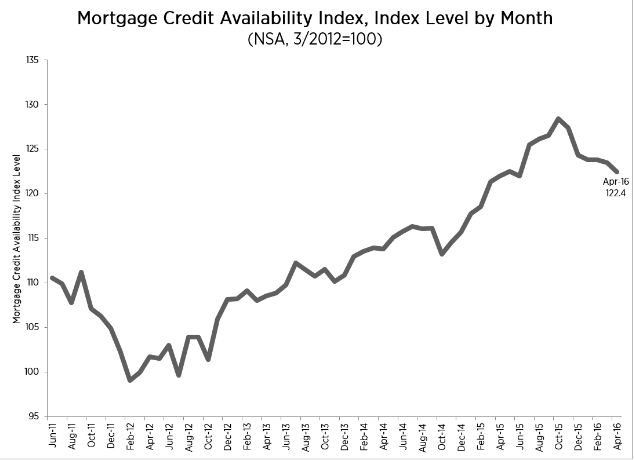
Mortgage credit got tighter in March, according to the MBA's Mortgage Credit Availability Index. It was most pronounced in government lending, which could have been explained by some of the weakness and illiquidity we were seeing in the higher coupon Ginnie securities. Ginnie investors have been burned by higher prepay speeds and have been reluctant to buy the higher coupon securities. This makes the higher note rates (which is where the lower credit scores usually reside) cut off from the rest of the market. 


Friday, March 9, 2018

Morning Report: Goldilocks Jobs Report

Vital Statistics:

Last Change
S&P Futures  2762.3 17.0
Eurostoxx Index 376.8 0.2
Oil (WTI) 60.6 0.4
US dollar index 83.9 0.0
10 Year Govt Bond Yield 2.9%
Current Coupon Fannie Mae TBA 102.25
Current Coupon Ginnie Mae TBA 102.5
30 Year Fixed Rate Mortgage 4.4

Stocks are higher after the strong jobs report. Bonds and MBS are down. 

Jobs report data dump:
  • Nonfarm payrolls up 313,000 vs expectations of 205,000
  • Unemployment rate 4.1% vs expectations of 4.0%
  • Labor Force Participation rate 63% vs expectations of 62.7%
  • Average Hourly Earnings up .1% / 2.6% vs expectations of .2% / 2.9%
Overall a great report for the stock market. Strong growth in payrolls, without a massive increase in wage growth. The civilian employment to population ratio increased from 60.1% to 60.4%, which matched the post-crisis record set in September. The labor force increased by 800k, while the population increased by 150k. The civilian employment to population ratio peaked in 2000 at 64.7% and bottomed in 2009 at 58.3%, and we are much closer to the low than we are to the high. Some of that is demographics, however there is undoubtedly still slack in the labor market that number bears it out. Which is why we still have the wage inflation typically associated with 6% unemployment and not 4% unemployment. 


The Fed funds futures didn't do much on the report - as we approach the March meeting, the probabilities of a hike continue to increase and are sitting at 89%, and the December futures are still coalescing around a prediction of 3 hikes this year. Chicago Fed President Charles Evans says he would argue against a March hike. 

Home Depot is donating $50 million to train 20,000 construction workers over the next decade. "It's important that we support the trades," Home Depot CEO Craig Menear said in an interview. "Not only do we sell product to professionals like plumbers and electricians," but the company also partners with service providers that install kitchen flooring, hot water heaters and other equipment in consumers' homes. There are still 158,000 job openings in the construction sector that need to be filled. 

Donald Trump announced tariffs of 25% on steel and 10% on aluminum yesterday, with temporary relief for Canada and Mexico while we renegotiate NAFTA. Senator Jeff Flake introduced legislation to overturn these tariffs. I would bet there are enough votes in both chambers to pass the bill, and there might be enough to override a veto. 

File under "Only Nixon could go to China:" Donald Trump will meet North Korean President Kim Jong Un in May, to discuss the country abandoning its nuclear weapons program. 

Mortgage credit decreased in February, according to the MBA's Mortgage Credit Availability Index. Apparently the decrease was due to a single large investor in the conventional space. While we are close to post-crisis levels in the index, we are a long way from the go-go days of the bubble. 

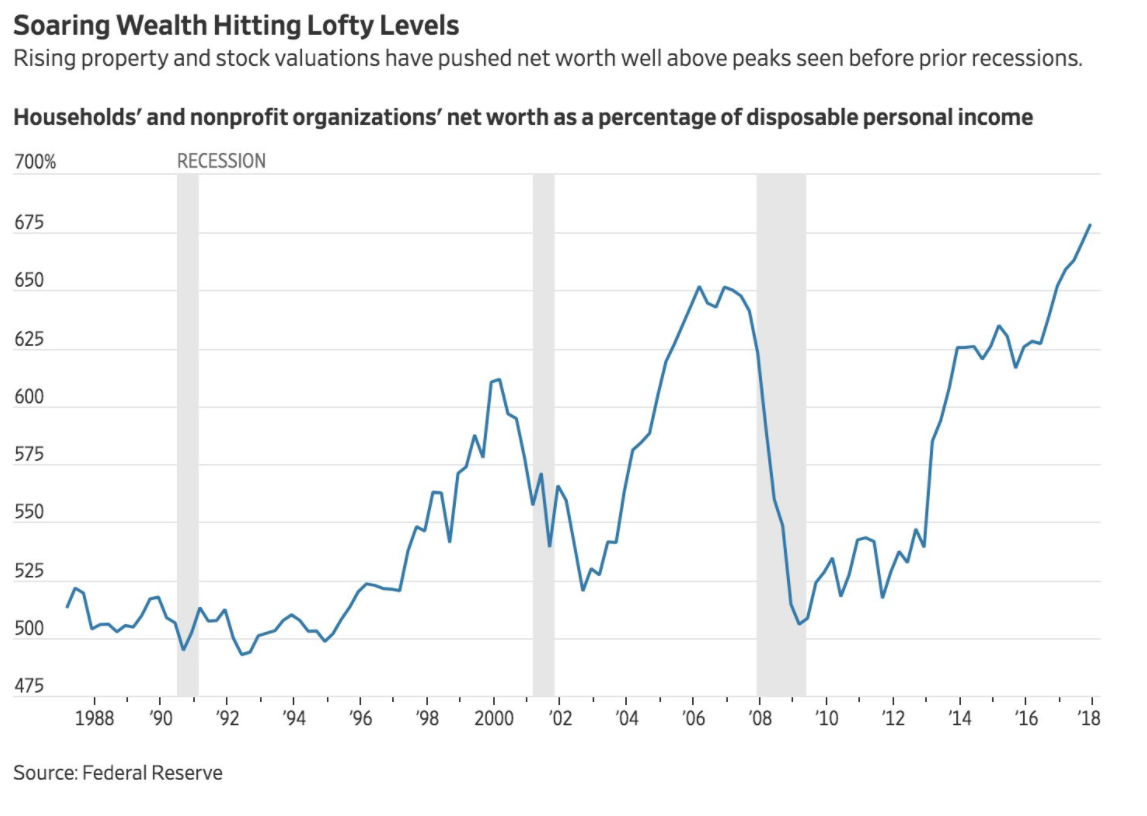
Soaring stock and real estate prices have sent net worth as a percent of disposable income to record levels.  I wouldn't be surprised to see this number fall as the Fed pulls back support for the asset markets and we finally start seeing wage inflation. 


Monday, February 5, 2018

Morning Report: Friday's jobs report and the FOMC

Vital Statistics:

Last Change
S&P Futures  2848.0 -9.0
Eurostoxx Index 382.4 -5.7
Oil (WTI) 65.0 -0.4
US dollar index 83.6 0.0
10 Year Govt Bond Yield 2.83%
Current Coupon Fannie Mae TBA 103.591
Current Coupon Ginnie Mae TBA 103.688
30 Year Fixed Rate Mortgage 4.26

Markets are lower this morning as last week's weakness continues. Bonds and MBS are flat.

Not a lot of data this week (typical in the week after the jobs report), but we will have plenty of Fed-Speak all week. 

The services economy continues to hum, as the ISM non-manufacturing PMI hit 59.9. 

Bonds rolled over Friday on the jobs report, which showed stronger-than-expected wage growth. The 10 year bond yield has increased dramatically since last fall, and it certainly looks like bond yields want to test that 3% level. 


Despite the big sell off in the bond market on the jobs report, the Fed Funds futures didn't really do much - they are predicting a 78% chance of a 25 basis point hike in March, which is where it was mid week. Janet Yellen has previously said she wanted to "let the labor market run hot" and Jerome Powell is considered to be more or less the same philosophically as Yellen was on the issue of monetary policy. I suspect the Fed is comfortable to maintain the current pace of rate hikes, to get off the zero bound and allow the economy to digest the new levels. They don't need to be aggressive quite yet, and IMO they are looking at the employment - population ratio as much as the increase in average hourly earnings. If you look at it from their standpoint, they have a duty to maximize employment as well as control inflation. Even though the unemployment rate says "full employment" the employment to population ratio and the labor force participation rate do not. Some of the drop is demographic, but not all of it. Here is a way to put the drop in the labor force participation rate into perspective: The big increase in the labor force participation rate started in the 1960s and was driven by women entering the workforce. Half those gains were given back during the recession. Until that number moves up, the Fed is going to stay dovish unless we get a massive upward surprise on inflation. 

Won't all of these raises were are seeing force the Fed's hand? More and more companies are increasing compensation and capital expenditures. Keep this in mind: one-time bonuses are probably not going to do much for inflation, especially if they are saved / used to pay down debt. That said, the increase in paychecks from tax reform starts this month. 

The Atlanta Fed raised its Q1 GDP estimate to 5.4% on Friday. They have been a bit of an outlier in terms of growth predictions, but still - 5% plus is an eye-popping number.

Forbes has a list of the best housing markets for 2018... Lots of Midwestern and Southern cities, and none of the usual suspects like SF, Seattle, etc. 

Acting CFPB Director Mick Mulvaney has taken the office of Fair Lending and Equal Opportunity and moved it under his direct control. Consumer advocates are unhappy, but this looks mainly like a shuffling of the organizational chart. The big change - Mulvaney will be in charge of enforcement, which is in keeping with the philosophy he outlined in his memo to the CFPB

Friday, September 1, 2017

Morning Report: Mediocre Jobs report

Vital Statistics:

Last Change
S&P Futures  2475.8 5.8
Eurostoxx Index 375.9 2.0
Oil (WTI) 47.0 -0.3
US dollar index 85.3 -0.4
10 Year Govt Bond Yield 2.11%
Current Coupon Fannie Mae TBA 103.33
Current Coupon Ginnie Mae TBA 104.21
30 Year Fixed Rate Mortgage 3.86

Stocks are higher despite a mediocre jobs report. Bonds and MBS are up. 

Jobs report data dump:
  • Payrolls up 156,000
  • Unemployment rate 4.4%
  • Hourly earnings up 0.1% MOM / 2.5% YOY
  • Labor force participation rate 62.9%
  • 2 month payroll revision down 41,000
Another month where the ADP number was way off of what BLS reported. For the markets, it is a Goldilocks report which is strong enough to keep the recovery going and weak enough to keep the Fed from tightening too aggressively. Construction, professional business services, and manufacturing were the biggest contributors to job growth. Manufacturing job growth was the highest in 5 years, which is encouraging.  2.5% annual wage growth is nothing to write home about, however with inflation around 1.5% or so, it is probably the best we can hope for at the moment. The Fed funds futures moved a touch more towards the Fed standing pat in December and September. 

The strong manufacturing job growth was echoed in the latest ISM Manufacturing Survey, which improved in July. New Orders and Production drove the big increase, although employment was close behind. The reading of 58.8 is usually associated with 4.9% GDP growth. Given that strength, wage growth should be accelerating. 

Construction spending fell in July by 0.6% and is up only 1.8% YOY. Residential construction improved however, which we need to see to alleviate the tight inventory issue. 

Gasoline prices are up 25% in some places after Harvey affected about 10% of the US's refining capacity. Higher gas prices have invariably tilted towards lower growth and a drop in the consumer confidence indices. Expect to see some hand-wringing over the mindset of the consumer going forward. 

Bond strategists are flummoxed to explain the bond market's rally over the past few months. At the beginning of the year, most were thinking the 10 year would yield closer to 3%, however yields have dropped by about 40 basis points instead. With GDP growth around 3%, you should expect to see investors dump Treasuries, but it hasn't happened. IMO the Trump reflation trade was always a bit of a stretch, and pre-election yields were closer to reality than post-election yields. Still, there are a lot of bears that are having a tough year right now. 

Almost half of all homes in the US have regained their bubble peaks, according to Zillow. The leading MSAs are Denver and Dallas, while the ones who still lag the most include Las Vegas and Riverside. 

Monday, August 7, 2017

Morning Report: Why hasn't there been better wage growth?

Vital Statistics:

Last Change
S&P Futures  2474.5 2.8
Eurostoxx Index 381.6 -0.9
Oil (WTI) 49.0 -0.6
US dollar index 86.3 0.0
10 Year Govt Bond Yield 2.27%
Current Coupon Fannie Mae TBA 102.93
Current Coupon Ginnie Mae TBA 103.81
30 Year Fixed Rate Mortgage 3.94

Stocks are up this morning on no real news. Bonds and MBS are flat.

Should be a relatively dull week after the employment report. Not much in the way of data but we do have Fed-speak almost every day. 

Last Friday's jobs report didn't have much of an impact on the Fed Funds futures. They are forecasting a 99% chance of no hike at the September meeting, while the December meeting is being priced as a coin toss. The consensus seems to be that the September meeting will usher in the next steps in reducing the size of the Fed's balance sheet. 

The jobs report prompted a lot of articles asking about wage growth and why we aren't seeing it. The usual explanations include low productivity, lack of bargaining power on the part of workers, and the untapped reservoir of the long-term unemployed. IMO maybe the answer IS inflation - at 1.5% PCE growth, maybe 1% real wage growth is about the best we can hope for. We are seeing wage inflation in pockets (especially skilled labor and construction) however unskilled labor is still competing with technology which unfortunately keeps getting better and cheaper. Also, note that wage and job growth has been uneven geographically. 

The post-election spike in interest rates pushed down prepayment speeds and refis earlier this year. Now that interest rates have corrected some of that move, we are seeing them increase again, according the Black Knight Financial Services. The January and February numbers were the most depressed, which reflects the increase in the 10 year to 2.6% post-election. 


Wells Fargo has admitted that the fake account scandal could be bigger than previously thought. Meanwhile, Trump administration is taking a look at the Obama-era settlements where banks were forced to donate to third party activist groups as part of their settlement. 

Why are Treasury investors buying them at what will probably turn out to be a negative yield after taxes and inflation? Because the alternative (of losing more in the stock market). 

Friday, August 4, 2017

Morning Report: Strong jobs report

Vital Statistics:

Last Change
S&P Futures  2474.5 2.8
Eurostoxx Index 380.7 1.8
Oil (WTI) 48.9 -0.1
US dollar index 86.1 0.0
10 Year Govt Bond Yield 2.26%
Current Coupon Fannie Mae TBA 102.93
Current Coupon Ginnie Mae TBA 103.81
30 Year Fixed Rate Mortgage 3.94

Stocks are higher this morning after the jobs report beat expectations. Bonds and MBS are down.

Jobs report data dump:
  • Payrolls up 209,000
  • Unemployment rate 4.3%
  • Labor force participation rate 62.9%
  • Average hourly earnings up 0.3% MOM / 2.5% YOY
Not a bad report. The Street was looking for 180,000 jobs, so the number was better than expected. Most of the job gains were in professional / business services, healthcare, and restaurants / bars. The two month revision was negligible. Wage growth remains sluggish, which is probably due to the huge shadow inventory of discouraged workers on the sidelines. 

Small business owners are the most optimistic in 10 years, according to Gallup. The biggest challenge to small business? Government. 


Wow. The Atlanta Fed is forecasting 4% GDP growth in Q3. The rest of the street is around 2.4%. 

Friday, July 7, 2017

Morning Report: Decent jobs report

Vital Statistics:

Last Change
S&P Futures  2415.8 7.3
Eurostoxx Index 379.5 -0.9
Oil (WTI) 44.6 -0.9
US dollar index 88.3 0.1
10 Year Govt Bond Yield 2.38%
Current Coupon Fannie Mae TBA 102.88
Current Coupon Ginnie Mae TBA 103.75
30 Year Fixed Rate Mortgage 4.06

Stocks are higher this morning after a decent jobs report. Bonds and MBS are down.

  • Nonfarm payrolls up 222,000
  • Unemployment rate 4.4%
  • Labor Force Participation rate 62.8%
  • Avg weekly earnings up .2% MOM and 2.5% YOY
Overall, it is a decent report. The payroll number was a bit higher than expectations. The wage numbers are certainly nothing to get the Fed worried about inflation, although we still aren't making much headway on bringing the long-term unemployed back into the labor force. Bringing those folks back into the workforce is the key (along with improving housing construction) to improving the economy from "meh" to "boom."

The bifurcation in the employment market between those with jobs and those without is evident in what recruiters are saying: It is the hottest market in memory for some headhunters and things are definitely candidate-driven. Companies have been loath to give raises for over a decade, but they may be forced to in order to attract / retain talent. 

Ray Dalio and Jeffrey Gundlach believe the top is in for the bond market (in other words, rates are going higher) and that stocks are vulnerable. Being short bonds is probably one of the biggest fast-money / wiseguy trade on the Street right now. Note however that notwithstanding the pop in yields over the past week or so, most of these guys are lugging a losing position. 

Federal Reserve Governor Jerome Powell called the current US housing system unsustainable, and pointed directly at Fannie and Fred. Here is the problem: US mortgage rates are artificially low, and that is due to government subsidies. The 30 year fixed rate mortgage is a distinctly American phenomenon. In the US, the taxpayer bears the credit risk and the lender bears the interest rate risk. Loans are guaranteed by the government, which means the lender gets paid even if the borrower stops paying. The 30 year fixed rate means the borrower has no interest rate risk - it doesn't matter where rates go, their rate stays the same. Everywhere else, the lender bears the credit risk and the borrower bears the interest rate risk (because everywhere else the rate floats with interest rates after a certain time period). Without the government backing, no lender would make loans at the rates Fannie and Fred can offer. His point is that real estate prices are based on subsidized borrowing rates and that makes the real estate market more susceptible to downdrafts. Nothing is going to change however - the US residential real estate finance market has been largely the same since the New Deal and there really is no replacement for it. Just remember this any time someone blames 2008 on the "free market." There is nothing, absolutely nothing "free market" about the US residential real estate market. There hasn't been since the Great Depression. 

Monday, April 3, 2017

Morning Report: Big week for Washington

Vital Statistics:

Last Change
S&P Futures  2358.5 -0.8
Eurostoxx Index 381.4 0.3
Oil (WTI) 50.8 0.0
US dollar index 90.4
10 Year Govt Bond Yield 2.38%
Current Coupon Fannie Mae TBA 103.41
Current Coupon Ginnie Mae TBA 103.7
30 Year Fixed Rate Mortgage 4.13

Stocks are flattish on no real news. Bonds and MBS are flat as well.

The ISM Manufacturing Report ticked up slightly in March. New orders and production slipped while employment gained. Prices rose as well. The reading of 57.2 would correspond historically with about a 4.4% increase in real GDP.

Construction spending rose 0.8% MOM in February and is up 3.0% annualized. Residential construction rose 1.8% MOM and is up 6.3% YOY. 

We have a relatively news heavy week coming up with the FOMC minutes and the jobs report. We will also get the ISM data this week. 

This week will give will also be important politically. Republican Supreme Court nominee Neil Gorsuch will be voted on in the Senate. Minority leader Chuck Schumer has demanded a 60 vote threshold to confirm him (here is the current state of affairs there), and Mitch McConnell has said Gorsuch is getting confirmed one way or the other, which is a threat to change Senate rules on judicial nominations (the nuclear option). If the Democrats filibuster Gorsuch and McConnell changes the rules, it pretty much poisons the well for any sort of bipartisan legislation like health care reform, tax reform, or financial reform. This would be good for rates at the margin. 

Cash-out refinances are about 44% of all refis these days, which is a pickup from the depths of the bubble, but nowhere near the heady times of the bubble years where people used cash out refis to fund consumption. Today, cash-out refinances are used more to refinance debt, especially credit card debt. 


As a general rule, when stocks and bonds disagree, go with what bonds are telling you. Mohammed El-Arian breaks that rule to say the bond market has it wrong. His point is that the bond market is underestimating how assertive the Fed is becoming. 

Good article for the first time homebuyer.. All the stuff that can come up and surprise you. Bonus tip: Don't load up on credit for all the things you will need for your new house until after your loan closes. 

Friday, March 10, 2017

Morning Report: Decent jobs report

Vital Statistics:

Last Change
S&P Futures  2378.0 11.8
Eurostoxx Index 374.8 1.9
Oil (WTI) 49.9 0.6
US dollar index 91.9
10 Year Govt Bond Yield 2.60%
Current Coupon Fannie Mae TBA 101.438
Current Coupon Ginnie Mae TBA 102.784
30 Year Fixed Rate Mortgage 4.21

Stocks are higher this morning after a strong jobs report. Bonds and MBS are up small. 

Jobs report data dump:
  • Payrolls up 235k vs 200k expected
  • unemployment rate 4.7%
  • labor force participation rate 63%
  • average hourly earnings up 0.2% MOM, up 2.8% YOY
Overall a decent report. Didn't match the ADP number on payrolls, but ADP generally correlates with the revised BLS report, not the first one. Looks like the Fed is going to hike next week. Note another big increase in construction employment, to 58k, which is the highest since 2007. Bonds had already sold off on the strong ADP number, so they are recouping some of those losses today. 

Donald Trump met with community bankers yesterday and promised to ease the regulatory burden the state has imposed on them. There has generally been bipartisan agreement that the regulatory burden on small banks has been too heavy, and that it is inhibiting credit to small business. 

Goldman is out with a call this morning forecasting that the Fed will hike 3x this year: March, June, and September. They expect the Fed to end their reinvestment of maturing assets in the fourth quarter this year. The end of reinvestment shouldn't have a major effect on mortgage rates, since spreads were largely insensitive to QE in the first place. 

The Fed funds futures are now forecasting a 50% chance of a June rate hike, up from about 20% a couple weeks ago. 

Household net worth increased to record levels in the fourth quarter, according to the Federal Reserve. The ratio of net worth to disposable income hit 6.5x, which matches bubble-era highs. 


Friday, February 3, 2017

Morning Report: Decent Jobs Report

Vital Statistics:

Last Change
S&P Futures  2281.3 4.5
Eurostoxx Index 364.1 2.2
Oil (WTI) 53.8 0.2
US dollar index 90.6 0.1
10 Year Govt Bond Yield 2.47%
Current Coupon Fannie Mae TBA 102.1
Current Coupon Ginnie Mae TBA 103.2
30 Year Fixed Rate Mortgage 4.19

Stocks are up after a decent jobs report. Bonds and MBS are up as well.

Jobs report data dump:
  • Nonfarm payrolls up 227,000
  • 2 month prior revision down 39,000
  • Unemployment rate 4.8%
  • Underemployment rate 9.4%
  • Labor force participation rate 62.9%
  • Average hourly earnings up 0.2% MOM / up 2.5% YOY
Overall, a pretty decent report. Payrolls were much better than expectations, although the downward revision of 40,000 to November offset that somewhat. The employment to population ratio ticked up from 59.7 to 59.9, which is something the Fed pays close attention to. The year-over-year increase in wages took a step back, but part of that is due to very strong January 2016 number which fell off the YOY comparison. In terms of industries, we saw big increases in construction and retail. The oil patch is hiring again as well. In some ways this was a Goldilocks type report: strong enough to make the stock market happy, and weak enough in wage growth to keep bonds from selling off. 

The ISM non-manufacturing index took a step back in January from December's strong pace. Factory orders increased 1.3%. 

President Trump has ordered a comprehensive review of Dodd-Frank and suspended Obama's fiduciary rule executive order which was to take effect in April. The goal of the review is to remove regulatory burdens to the financial industry and to increase investor options, according to an administration official. Areas of focus include reforming the CFPB, the Volcker rule, and the fiduciary order. Critics claim that the CFPB is restricting credit, the Volcker rule is restricting liquidity in the markets, and the fiduciary rule amounts to a gag order for retirement advisors. 

US CEOs are meeting with Donald Trump today, as the relationship between the two becomes more tenuous. The problems are twofold. First, the left is organizing boycotts on any company associated with the Trump administration, while culminated in Uber's CEO resigning from Trump's business panel after the #deleteUber campaign. Second, fears of immigration limits are worrying many, particularly in the tech space. Finally Trump's naming and shaming of companies via Twitter is causing uncertainty as well. 

Interesting article in the Wall Street Journal about the future of the labor market and the business world's continued move towards outsourcing, even within the US. Companies like Pratt and Whitney are now using UPS to handle parts of the logistics chain that used to be done by Pratt and Whitney employees. This obviously gives the company more flexibility and they don't have to deal with the HR issues of hiring and firing. Temporary worker agencies continue to grow and allows companies to have "just in time" employee management. Accenture sees a future where the only full time employees at some companies are C-level: the rest will be temps. I wonder if it will work out the way these companies imagine however. Once these agencies control vast parts of the company's operations, the agency will be able to hold up a company for higher rates the way unions used to hold up companies for higher wages. 

Freddie Mac has a somewhat gloomy outlook for origination next year, forecasting a drop of 25% from 2016's level of $2 trillion in origination. They see the 30 year mortgage rate averaging 4.4% and total home sales falling from 6 million to 5.75 million. House price growth is expected to moderate to 4.7% from 6%. Freddie Mac is baking in some possibility of expansionary fiscal policy coming out of Washington, especially with respect to tax reform, where an increase in the standard deduction will reduce the incentive to itemize and reduce the subsidy from the mortgage interest deduction. They do point out that increases in interest rates have been generally short-lived over the past 8 years as slow global growth and excess savings find their way into the bond market. Freddie Mac caveats this outlook with the fact that the new administration provides a lot of uncertainty. FWIW, it is looking like it will take 60 votes to get anything done in the Senate, which means a fiscal status quo. That will likely mean only 2 hikes in 2017, not 3. Rates may not be going up as much as people think.

You can see the refinanceable population has decreased significantly as rates have risen:


Friday, December 2, 2016

Morning report: Unemployment and wages fall

Vital Statistics:

Last Change
S&P Futures  2190.0 -2.0
Eurostoxx Index 338.2 -3.0
Oil (WTI) 51.1 0.0
US dollar index 91.5 -0.2
10 Year Govt Bond Yield 2.41%
Current Coupon Fannie Mae TBA 103
Current Coupon Ginnie Mae TBA 104
30 Year Fixed Rate Mortgage 4.14

Markets are flattish as investors digest the jobs report. Bonds and MBS are flat as well. 

Jobs report data dump:
  • Payrolls up 178k vs 170 expected
  • Unemployment rate 4.6% vs. 4.9% expected
  • Labor force participation rate 62.7% vs 62.8% expected
  • Average hourly earnings down .1% vs expectations of a .2% increase
On balance, the report was mixed. While the drop in the unemployment rate was encouraging, the drop in wages was a disappointment. The drop in the labor force participation rate didn't help things either. This probably doesn't change the Fed's thinking for the FOMC meeting in a couple of weeks. 

The bright spot in the report: the big drop in the unemployment rate for the age 25-34 cohort. Good news for the mortgage and real estate industry. Anecdotally, college applications are falling markedly, which indicates people are getting jobs as opposed to going back to school. Overall, it means the first time homebuyer is in better shape. 

Bonds initially rallied on the report, but have given back their gains. 

Bill Gross isn't buying the big rally in stocks lately. “An investor should move to cash and cash alternatives, such as high probability equity arbitrage situations,” Gross, who runs the $1.7 billion Janus Global Unconstrained Bond Fund, said. “Bond durations should be far below benchmarks.” The bond duration comment means he sees interest rates continuing to rise. In his view, equity investors are putting too much stock in things like regulatory reform and fiscal stimulus, as demographics and low productivity are likely to remain the more dominant forces in the market, which is ultimately bearish for stocks. Separately, investors pulled $4.1 billion out of taxable bond funds last week

HUD has raised the FHA loan limit to $424,100. following the increase from Fannie Mae. 


Friday, October 7, 2016

Morning Report: Decent jobs report

Vital Statistics:

Last Change
S&P Futures  2156.0 -1.0
Eurostoxx Index 340.7 -2.0
Oil (WTI) 50.2 -0.3
US dollar index 87.7 0.0
10 Year Govt Bond Yield 1.76%
Current Coupon Fannie Mae TBA 103.3
Current Coupon Ginnie Mae TBA 104.2
30 Year Fixed Rate Mortgage 3.54

Stocks are flat this morning after an ok jobs report. Bonds and MBS are down.

Jobs report data dump:
  • Nonfarm payrolls increased by 156,000 (August revised upward)
  • Unemployment rate 5%
  • Labor Force Participation Rate 62.9%
  • Average weekly earnings up 0.2% (2.6% annually)
  • Average weekly hours 34.4
Overall, a decent report, but nothing to write home about. The best news in the report was the increase in the participation rate as the labor force increased by about 440k while the number of employed increased by about 350k. The labor force participation rate looks like it may have bottomed, at least for now.

Global sovereign debt continues its sell-off, with the German Bund venturing back into positive yield territory. Overnight we had a flash crash in the British pound, which fell 6%. For currency traders, a 6% move is gargantuan. 

We will have a lot of Fed-speak today, with Stanley Fischer at 10:30, Loretta Mester at 12:45, Esther George at 3:00 pm and Lael Brainard at 4:00. 

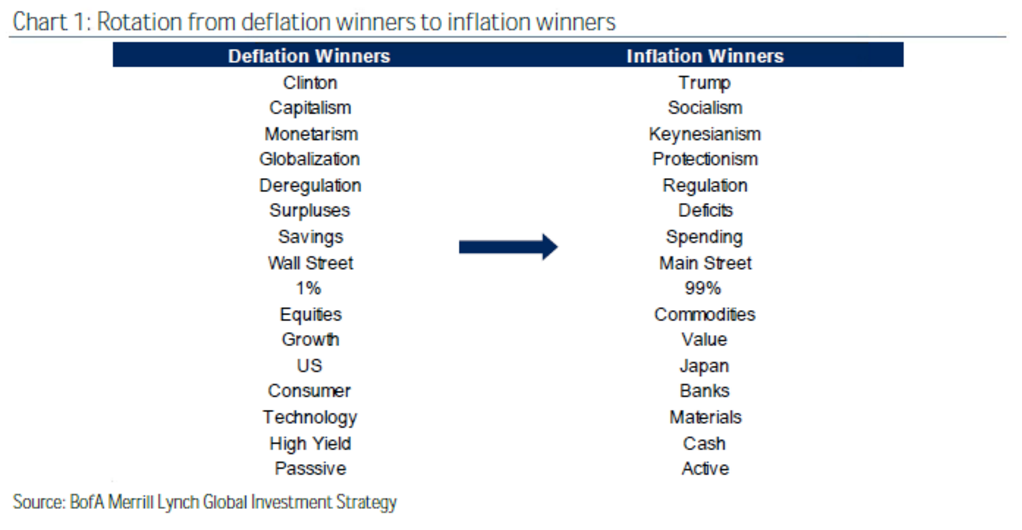
Bank of America is out with a report saying that the new populism and push-back against globalization represents a possible sea-change in asset pricing. The big picture is that we are moving from a "deflation" asset pricing environment to an inflation asset pricing environment. Corporate profitability will suffer as wages increase, regulation increases, and people push back against using globalization as a means of cost-cutting. Government attempts to goose the economy will transition from monetary stimulus to fiscal stimulus. Overall, bad for bonds, but probably good for real estate. 


Assuming Hillary wins, she may face the same nemesis her husband did early in his first term: bond market vigilantes. Every time Bill Clinton talked about stimulating the economy, bonds would sell off, which would offset any potential stimulative effect. Bob Woodward said that Bill Clinton's reaction to this dynamic as :"You mean to tell me that the success of my program and my reelection hinges on the Federal Reserve and a bunch of f*****g bond traders?" Clinton political adviser James Carville said at the time that “I used to think that if there was reincarnation, I wanted to come back as the president or the pope or as a .400 baseball hitter. But now I would like to come back as the bond market. You can intimidate everybody." 

Regardless of what this does to the refi market, it should positively affect the purchase market. Currently, the homeownership percentage for the Millennials is about 34%. That number should increase to above 40% as the Millennial age cohort hits homebuying age. The homeownership rate for the 35-45 age cohort has historically been 60%+. So there is a lot of pent-up demand for homes, which should keep the purchase business humming for many years to come. 


Tuesday, September 6, 2016

Morning Report: Jobs report disappointing

Vital Statistics:

Last Change
S&P Futures  2180.0 2.0
Eurostoxx Index 351.0 0.3
Oil (WTI) 44.2 -0.2
US dollar index 86.5 -0.2
10 Year Govt Bond Yield 1.59%
Current Coupon Fannie Mae TBA 103.3
Current Coupon Ginnie Mae TBA 104.2
30 Year Fixed Rate Mortgage 3.5

Markets are slightly higher this morning on no major news. Bonds and MBS are flat.

Jobs report data dump:

  • Nonfarm payrolls + 151k vs 175k expected
  • Unemployment rate 4.9% vs 4.8% expected
  • Labor force participation rate 62.8% flat
  • Average hourly earnings +0.1% vs. 0.2% expected
  • Average weekly hours 34.3 versus 34.5 expected
Overall, not a report that should move the needle for the Fed, especially with respect to the September meeting. Bonds initially rallied on the report, but sold off during the rest of the day. The key numbers (the disappointing hourly earnings and average weekly hours) point to the Fed standing pat in September.

The ISM Non-Manufacturing missed expectations by a country mile, falling to 51.4 versus expectations of 55. Growth is still positive (since the number is above 50), but growth took a big step back. 

The Labor Market Conditions Index slipped to -0.7 in August. 

Lack of construction workers are a drag on housing, according to Freddie Mac. About 30% of the construction workers from 10 years ago found jobs in other fields. There are about 200,000 unfilled construction jobs in the US at the moment, and the ratio of job openings to hiring is the highest since 2007. The number of open jobs has increased 81% over the past two years. 

Home prices rose 6% YOY in July, according to CoreLogic. Home price appreciation continues its torrid pace out West, while the Northeast and Midwest lag. We are beginning to see overvalued markets especially out west. Here is a map of the overvalued (red) and undervalued (green) markets:


Delinquencies ticked up in July, according to the Black Knight Financial Services Mortgage Monitor. Part of that was technical, with the month ending on a Sunday. Foreclosures and foreclosure inventory continue to work their way downwards.


What are the markets thinking about the Hillary versus Trump match up? While the US has some betting markets, the UK has a very liquid market in betting. You can track the markets here, at Sporting Index. The current markets are here:


The original bets pre-dated the conventions, so the payout is 25 if the person gets the party nomination and 50 if they win. Based on these markets the implied probability of the election is 72% Clinton, 28% Trump. FWIW, in the US-based PredictIt markets, Trump costs 37 cents and Hillary costs 64 cents... 

Friday, August 5, 2016

Morning Report: Strong jobs report

Vital Statistics:

Last Change
S&P Futures  2179.0 14.0
Eurostoxx Index 341.0 3.0
Oil (WTI) 41.3 -0.6
US dollar index 87.0 -0.2
10 Year Govt Bond Yield 1.56%
Current Coupon Fannie Mae TBA 103.3
Current Coupon Ginnie Mae TBA 104.2
30 Year Fixed Rate Mortgage 3.52

Markets are higher after a stronger than expected jobs report. Bonds and MBS are down.

Jobs report data dump:

  • Nonfarm payrolls +255,000
  • Unemployment rate 4.9%
  • Labor Force Participation rate 62.8%
  • Average hourly earnings +0.3% (2.6% YOY)

Overall, a good report. Not sure it moves the needle with the Fed in September, but it looks like May's super-weak report was an aberration. The underemployment rate increased however, which suggests that the long-term unemployed may be coming back to the market, but they have to settle for part time jobs.

Bonds sold off on the report, with the 10 year yield up about 4 basis points, and the 2 year up 6.


Friday, July 8, 2016

Morning Report: June payrolls rebound in a big way

Vital Statistics:

Last Change
S&P Futures  2112.0 15.0
Eurostoxx Index 324.3 2.1
Oil (WTI) 45.5 0.4
US dollar index 87.1 0.1
10 Year Govt Bond Yield 1.41%
BankRate 30 Year Fixed Rate Mortgage 3.44

Stocks are higher after the jobs report came in stronger than expected. Bonds and MBS are down small.

Jobs report data dump:
  • Nonfarm payrolls + 287k
  • Two month revision -6k
  • Unemployment rate 4.9%
  • Labor force participation rate 62.7%
  • Average weekly hours 34.4
  • Average hourly earnings + 0.1% (+2.6% YOY)
The payrolls number is certain to get everyone's attention, however some of that might be a catch-up from May, which was revised downward to only 11k jobs. The 3 month average is 147k. Given Brexit, this report probably doesn't move the needle for the Fed. Until we start seeing more evidence of wage inflation the Fed isn't going to be aggressive. 

Mortgage rates have lagged the move downward in Treasuries. As we saw in 2012, bond yields bottomed out in July, but mortgage rates continued to fall for another 4 months, finally bottoming in November. We are seeing the same thing again, where mortgage rates have fallen with the 10 year, but nowhere near as dramatically. Note the MBA keeps bumping up its forecast for 2016 volume. 


Friday, June 3, 2016

Morning Report: Terrible jobs report means June rate hike off the table

Vital Statistics:


LastChangePercent
S&P Futures 2098.0-6.9-0.33%
Eurostoxx Index3031.4-32.1-1.05%
Oil (WTI)48.5-0.6-1.22%
LIBOR0.673-0.001-0.15%
US Dollar Index (DXY)95.38-0.510-0.53%
10 Year Govt Bond Yield1.71%-0.09%
Current Coupon Ginnie Mae TBA105.6
Current Coupon Fannie Mae TBA104.7
BankRate 30 Year Fixed Rate Mortgage3.63

Stocks are lower this morning after a weak jobs report. Bonds and MBS are up.

Jobs report data dump:
  • Nonfarm payrolls + 38k
  • 2 month payroll revision - 59k
  • Unemployment rate 4.7%
  • Average weekly hours 34.4
  • Average hourly earnings +0.2% MOM / +2.5% YOY
  • Labor force participation rate 62.6%
  • Underemployment rate 9.7%
Massive disappointment in the the payroll number. Lowest print in 6 years. If you add in the 2 month revision, May was negative. While the Verizon strike is adding some noise to these numbers (could be depressing them by as much as 35k), it was a huge miss compared to the 160k street estimate. The labor force participation rate seems to be heading back towards the lows of last September, which puts the number back towards lows not seen since the 1970s. The population increased by 205k while the labor force fell by 458k. The unemployment rate fell to 4.7%, however that is due to half a million people exiting the labor force.

The conclusion from the markets? Take June off the table. The market probability of a rate hike in June is now about 4%. You can see this in bonds: The 10 year bond yield fell 9 basis points on the report, but the real tell is the 2-year, which fell 11 basis points to 78 basis points. Between this report and the fears over Brexit (The UK leaving the EU) gives Janet Yellen enough uncertainty to not want to upset the apple cart any more. The focus will now turn to July. You can see the dramatic move lower in yields below:


Mortgage Credit Availability fell in April, according to the MBA. We saw tightening primarily in jumbos and high balance loans, which were offset by loosening in the new low-downpayment conforming loans.