A place where economics, financial markets, and real estate intersect.
Showing posts with label ZIRP. Show all posts

Monday, September 12, 2016

Morning Report: Global bond sell-off continues

Vital Statistics:

Last Change
S&P Futures  2111.5 -5.0
Eurostoxx Index 340.7 -5.0
Oil (WTI) 44.9 -1.0
US dollar index 86.5 0.3
10 Year Govt Bond Yield 1.68%
Current Coupon Fannie Mae TBA 103.3
Current Coupon Ginnie Mae TBA 104.2
30 Year Fixed Rate Mortgage 3.48

Stocks are weaker this morning as global markets continue the sell-off that began on Friday. Bonds and MBS are lower.

Dennis Lockhart is speaking this morning, and said that it is time to have a serious discussion about raising rates. Neel Kashkari and Lael Brainard will be speaking later on today. That should be the end of Fed-speak until the FOMC meeting later this month. Fed Funds futures are now signalling a 60% chance of a rate hike by the end of the year. 

So far it appears that mortgage rates are lagging the move up in sovereign yields. The same thing happened after the taper tantrum in 2013. The 10 year bottomed in spring, while mortgage rates kept falling and didn't start rising until fall. 

Donald Trump went after Janet Yellen and monetary policy, accusing the Fed of being political to protect Obama's legacy. FWIW, it seems like there is a change in the consensus over ZIRP and whether it is causing more problems than it is solving. Not too long ago, such comments would have been treated with "How dare you!" kvetching by the press. 

Certainly you are seeing the change in consensus overseas, as foreign bond markets have been selling off over the past week, with the German Bund now trading with a positive yield. Even the Japanese bond market is heading lower. Deutsche Bank lays out the scenarios going forward

The chart below (courtesy of Deutsche Bank) looks at overvaluation / undervaluation of various asset classes over a two centuries. Bonds are extremely overvalued (we know that already), but ZIRP has also caused overvaluation in stocks and real estate, which should unwind as rates start going up. Best case scenario: a situation like the post WWII era where rates gradually crept up over the course of a few decades. Of course currencies were linked to gold back then.. Today, we are on the PhD standard where the value of paper is based on the relative value of other paper. 


It is almost as if global bond markets jumped the shark last week when Sanofi and Henkel were able to issue corporate debt at negative yields

Wednesday, March 9, 2016

Morning Report: Consumers are becoming less bullish on house prices

Vital Statistics:


LastChangePercent
S&P Futures 1989.18.40.47%
Eurostoxx Index3029.016.10.54%
Oil (WTI)34.960.41.13%
LIBOR0.6350.0030.51%
US Dollar Index (DXY)97.37-0.224-0.23%
10 Year Govt Bond Yield1.87%   0.03%
Current Coupon Ginnie Mae TBA105.4
Current Coupon Fannie Mae TBA104.6
BankRate 30 Year Fixed Rate Mortgage3.68

Stocks are higher this morning as commodities rally and the market anticipates more stimulus from the European Central Bank tomorrow. Bonds and MBS are down small.

Mortgage Applications edged up 0.2% last week as purchases increased 4.2% and refis fell 2.3%. The 30 year fixed rate mortgage rose 6 basis points. We saw a big move up in ARM rates from 3.02% to 3.2%. In an environment where the yield curve is flattening, switching from an ARM to a 30 year fixed is the trade to make. 

Wholesale sales fell 1.3% last month while inventories built up 0.3%. The inventory-to-sales ratio is 1.35 month's worth, which is the highest since April of 2009. This is a negative sign for the economy going forward, as inventory build adds to GDP, and a buildup essentially "borrows" growth from future quarters. While this number doesn't carry the same weight it did 20 years ago, it still matters. 


Marco Rubio had a tough day yesterday. John Kasich is looking more and more like he could be the "establishment candidate." Bernie Sanders beat Hillary in Michigan, as anti-trade populism resonates deeply in the hard-hit rust belt. 

Consumers are becoming a touch less bullish on future home price appreciation, according to the latest Fannie Mae National Housing Survey. They anticipate that home prices will appreciate 1.7% next year, as opposed to 2.2% last month. We are certainly seeing some signs of softness in the oil states as well as the high end. Their view on the economy is about the most negative it has been since the big equity sell-off in August. 56% believe the economy is on the wrong track, and only 37% believe the economy is on the right track. This statistic explains the appeal of Sanders and Trump these days, two candidates who would ordinarily get zero traction. 

Global financial markets are forecasting that the age of ZIRP will be with us for 10 years or more. Sound far-fetched? Japan has been at 0% interest rates for over 20 years. Interest rate cycles are long. While the US may not be in the sort of deflationary trap that Europe and Japan are in, relative value trading will help keep a lid on rates going forward. In fact, the US may be more at risk of future asset bubbles than deflation. 

With rates so low, consumers are happy to rack up the credit card debt. The average credit card debt level for a US consumer is $7,879, closing in on the unsustainable levels we saw early in the Great Recession.

Thursday, October 29, 2015

Morning Report - The Fed stands pat

Vital Statistics:

Last Change Percent
S&P Futures  2074.8 -9.7 -0.47%
Eurostoxx Index 3398.1 -23.0 -0.67%
Oil (WTI) 45.51 -0.4 -0.94%
LIBOR 0.324 0.001 0.23%
US Dollar Index (DXY) 97.49 -0.297 -0.30%
10 Year Govt Bond Yield 2.11% 0.01%
Current Coupon Ginnie Mae TBA 104.6
Current Coupon Fannie Mae TBA 104.2
BankRate 30 Year Fixed Rate Mortgage 3.8

Markets are lower this morning after a lousy third quarter GDP pring. Bonds and MBS are down small.

The advance estimate of third quarter GDP came in at 1.5%, a big drop from the second quarter 3.9% reading. The standout was gross private investment which fell 5.6% after increasing 5% the quarter before. I suspect that is dollar / commodity price driven - exporters are facing slowing demand and capital expenditures are falling in the energy sector.

The core PCE index (the inflation measure preferred by the Fed) rose 1.2% in the third quarter, well below the Fed's 2% target rate. 

Initial Jobless Claims rose slightly to 260,000 last week. 

The Fed maintained interest rates yesterday, and made very few changes in the October statement. There was one dissent (Lacker) who wanted to raise the Fed Funds rate 25 basis points. In terms of language, the concern over overseas markets was removed. They noted the pace of job creation slowed somewhat, however they characterized business investment as solid. That is surprising given the big drop in business investment from the GDP print from this morning. Bonds sold off slightly on the statement, and stocks ended up reversing their losses and going out on their highs. The take seems to be slightly hawkish

The unintended consequences of ZIRP continue as merger mania sweeps the country. The entire semiconductor industry is merging, and now Allergan is in talks with Pfizer. Interestingly many merger arbitrage hedge funds are shutting down as returns are paltry in the strategy. 

The Republicans had another debate last night: The winners were Ted Cruz and Marco Rubio. The losers were Jeb Bush, CNBC, the mainstream media, and maybe John Kasich. 

Wednesday, October 7, 2015

Morning Report - Mortgage Applications shoot up 25%

Vital Statistics:

Last Change Percent
S&P Futures  1982.1 13.5 0.69%
Eurostoxx Index 3246.3 26.2 0.81%
Oil (WTI) 49.38 0.9 1.75%
LIBOR 0.323 -0.004 -1.19%
US Dollar Index (DXY) 95.43 -0.028 -0.03%
10 Year Govt Bond Yield 2.07% 0.03%
Current Coupon Ginnie Mae TBA 104.8
Current Coupon Fannie Mae TBA 104.4
BankRate 30 Year Fixed Rate Mortgage 3.84
Stocks are higher this morning as commodities rally, pulling along emerging markets with them. Bonds and  MBS are down.

Mortgage applications rose 25% last week as purchases rose 27%% and refis rose 24%. That is a surprising result given the Bankrate 30 year fixed rate mortgage rose 5 basis points last week. Some think that it was partly TRID-driven

Janet Yellen's intention to let the labor market run hot for a few years has some Fed watchers worried. The criticisms range from fears about creating another 1970s - style inflationary environment to worries about the Fed's credibility. We are in uncharted territory with the amount of control central banks worldwide are exercising over the economy. FWIW, I do not see much in the way of similarities between the 1970s and today: capacity utilization is low, and the chance of an oil shock is pretty remote. In fact we have the exact opposite situation. The inflation hawks make the case that monetary policy acts with such a lag that the die may already be cast for higher inflation (a similar argument that some of the global warming alarmists make with respect to CO2 in the atmosphere) The other point is more valid: the evidence that the Fed can influence wages and labor force participation is weak and the Fed is setting up unrealistic expectations that could damage its credibility down the road. 

Of course the other unintended consequence of ZIRP is the pressure it puts on pension funds. That probably is going to be the next crisis. We saw this movie before, in the 1950s. 

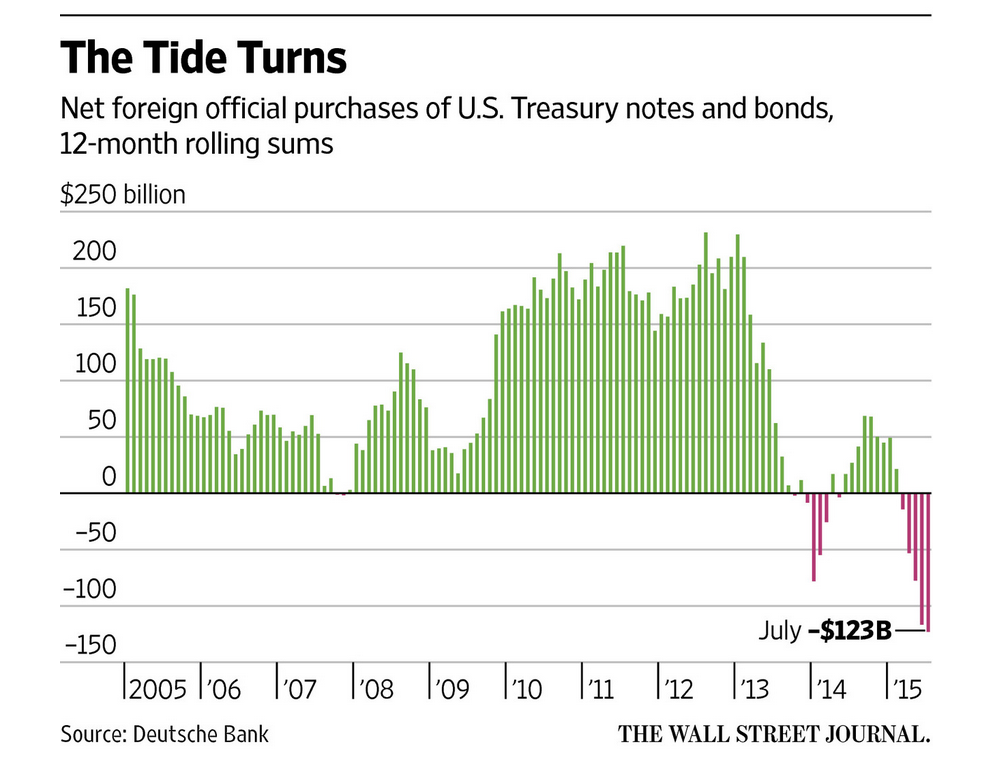
As we contemplate higher interest rates, foreigners are selling US Treasuries. While economic fundamentals will ultimately matter more than foreign fund flows, but it looks like foreign investors are cutting exposure ahead of higher rates. It probably will affect volatility, as primary dealers have pulled back market-making activity and Treasury markets have become less liquid in general. 


Now that house prices are approaching the 2006 peaks, some are arguing that we are in another bubble. Affordability is down as wages have gone nowhere, and scarcity is driving up prices. FWIW, bubbles are psychological phenomenons - the occur when buyers (and lenders) believe an asset is special and cannot go anywhere but up. We won't see another housing bubble in the US, but our grandkids might. 

Thursday, August 13, 2015

Morning Report: retail sales rise

Vital Statistics:

Last Change Percent
S&P Futures  2081.0 -3.2 -0.15%
Eurostoxx Index 3535.7 51.3 1.47%
Oil (WTI) 42.87 -0.4 -0.99%
LIBOR 0.314 0.000 0.05%
US Dollar Index (DXY) 96.66 0.399 0.41%
10 Year Govt Bond Yield 2.17% 0.03%
Current Coupon Ginnie Mae TBA 104.5 0.0
Current Coupon Fannie Mae TBA 103.7 0.0
BankRate 30 Year Fixed Rate Mortgage 3.83

Markets are flattish on no real news. Bonds and MBS are down.

Retail Sales rose 0.6% in July, in line with expectations. The control group, which strips out volatile items like autos, gasoline and building products rose 0.3%, below expectations. It looks like people are spending shifting spending from goods to services (ie restaurants). August's sales will be important - it signifies back-to-school shopping, which is a good predictor of holiday sales. 

Mortgage foreclosures fell to 2.09% in the second quarter from 2.22% in the first. Delinquencies fell from 5.54% to 5.3%. 

Import prices fell 0.9% in July, a little less than expectations. Inflation remains nowhere to be found. 

Initial Jobless Claims continue to hang around 4 decade lows. They rose slightly to 274k. 

The Bloomberg Consumer Comfort index ticked up slightly to 40.7 from 40.3. Sentiment remains soggy.

As we head into the September FOMC meeting, here is a dovish take on why the Fed should maintain ZIRP. His point is that the withdrawal of QE has already softened the economy and interest rates reflect the new normal of weak global growth and no inflation. Increasing rates risks tipping the economy back into a recession. While I am somewhat sympathetic to his argument, I doubt that 25 basis points on the Fed Funds rate is going to have that big of an impact, and the Fed will go slow. Janet's Addiction dies hard. 

The rent versus buy decision is getting easier. While home prices continue to rise, rents are rising faster as vacancy rates fall. In expensive places like LA, people are spending half their income on rent. Something to point out to first time buyers who are on the fence: Buy a home and get a 30 year fixed rate mortgage, and your principal and interest payment won't increase, ever. Beats the heck out the annual negotiation with the landlord. 


Tuesday, April 21, 2015

Morning Report - the wages of ZIRP...

Vital Statistics:

Last Change Percent
S&P Futures  2100.9 9.9 0.47%
Eurostoxx Index 3728.5 10.5 0.28%
Oil (WTI) 56.3 -0.1 -0.14%
LIBOR 0.276 0.001 0.24%
US Dollar Index (DXY) 98.09 0.152 0.16%
10 Year Govt Bond Yield 1.88% -0.01%  
Current Coupon Ginnie Mae TBA 103.4 0.0
Current Coupon Fannie Mae TBA 102.6 0.1
BankRate 30 Year Fixed Rate Mortgage 3.73

Stocks are higher this morning as earnings come in better than expected. Bonds and MBS are up.

Housing advocates are urging the government to investigate and intervene in communications between MBS holders and servicers. They claim that MBS investors (read Wall Street Sharpies) are urging servicers to forego modifications and to pursue "unnecessary foreclosures." Surprisingly, they hold up Ocwen as pillar of servicing virtue. Of course Ocwen is fighting for its life and will do anything it possibly can to make the government happy. 

New simpler mortgage disclosure forms are coming August 1, and they could slow closings as professionals learn to navigate the new system. 

M&A activity is picking up, with an interesting situation in the pharma sector. Mylan, who last week launched a hostile bid for Perrigo, now faces an unsolicited bid from Teva. A combination of low interest rates and high stock prices make growth by acquisition an attractive strategy. Teva's biggest drug faces generic competition so they need to replace that revenue. Mylan / Teva is going to face antitrust scrutiny. This situation looks like a fun one for the arbs. 

While ZIRP is helping to drive M&A activity, the unintended consequence is that insurers and pension funds are getting hammered as they cannot earn enough on their assets to cover their estimated liabilities. There are two ways out of the box: either assume it away with rosy estimates of asset return and liability inflation, or take a lot more risk. This is part of the reason why the Fed wants to get rates up to a more normal level. I suspect they fear we are going to have to bail out the state pension funds and / or insurance companies.

High end real estate has replaced gold as the go-to asset for storing wealth. Real Estate and contemporary art are the new store of value of choice for foreign investors. Gold, which used to have that role, cannot get out of its own way. Why? Blame the financial crisis, where gold sold off just like every other asset in a situation tailor-made for it. If gold was unable to rally in that sort of crisis, what good is it? Note that high end real estate in places like London, New York, and Vancouver are owned largely by Chinese investors, and China has its own issues, as even state-owned companies are now defaulting on their debt. As their real estate bubble bursts, it will be interesting to see if they liquidate overseas property. Generally in a crisis, you sell what you can, not necessarily what you want to. 

Thursday, April 16, 2015

Morning Report - Lousy housing starts

Vital Statistics:

Last Change Percent
S&P Futures  2091.3 -8.5 -0.40%
Eurostoxx Index 3755.6 -48.0 -1.26%
Oil (WTI) 55.51 -0.9 -1.56%
LIBOR 0.276 0.000 0.09%
US Dollar Index (DXY) 97.92 -0.401 -0.41%
10 Year Govt Bond Yield 1.87% -0.02%
Current Coupon Ginnie Mae TBA 103.5 -0.2
Current Coupon Fannie Mae TBA 102.5 0.0
BankRate 30 Year Fixed Rate Mortgage 3.79

Markets are lower this morning on European profit-taking. Bonds and MBS are up small.

Very disappointing housing starts numbers this morning - 926k versus expectations of 1.04M. Building permits fell to 1.04M as well. The weakness was both in single fam and mult-fam. It is hard to reconcile these numbers with the NAHB Homebuilder sentiment survey from yesterday, or the trading in the XHB ETF but here we are. You might be able to blame starts on the weather (and even that is a stretch) but you can't blame permits on that. Punch line: supply will remain tight, and prices will probably be a touch higher than people are forecasting. 

The Philly Fed Index improved to 7.5 versus 5 last month. 

The Bloomberg Consumer Comfort Index fell to 46.6 last week The perception of the buying climate is improving the most, while people's perception of the economy and their personal financial situation is improving more slowly.

Initial Jobless Claims increased to 294k last week. At least the labor market seems to be holding up, although wage growth is still lackluster. 

The left continues to agitate for "living wage" legislation and is hoping they have the beginnings of a movement. Set aside the fact that these protests are largely rent-a-mobs of union people, professional protesters, bums, and college students, there is something bigger happening here. This is at its core a war between "shareholder capitalism" and "stakeholder capitalism" as the left moves to seize ideological ground it lost 30 years ago. Expect to hear a lot of "If Company XYZ just suspended its stock buyback program, they could pay everyone a living wage" claims. 

We will undoubtedly see a lot of demagoguery about wages from politicians, but there really isn't much anyone can do about it. The Democrats will agitate for minimum wage hikes and living wage legislation while Republicans will blame regulation and an anti-business environment. The only thing that will change it is economic growth, and as long as we have slack in the labor market, wages aren't going up. Growth will happen, but we are still in the aftermath of a burst asset bubble, and recoveries from burst bubbles can be maddeningly slow. Of course this gives the Fed an excuse to stand pat, although they are creating bigger and bigger imbalances as ZIRP continues. 

The German Bund yield is now a single-digit midget. If you lend money to the German government for 10 years, you will get 9 bps. Guess we are headed to negative rates there as well. How are insurance companies like Allianz and Munich Re at 52 week highs? There is no way they can cover their actuarial liabilities in sovereign debt these days. I know the stock has a fat dividend yield of 4.1%, but I wouldn't bet on that dividend getting maintained. As I have said before, the actuarial tables don't care that money is free. Insurers are stuck between having to take a lot of risk for a little return or to simply use unrealistic future growth assumptions to remain solvent. 

Mel Watt is going to lower fees on Fan and Fred loans in order to increase lending to lower credit scores. The "free market' versus "housing policy as a means of social engineering" battle has been fought and is over. The social engineers won. 

Friday, April 10, 2015

Morning Report - GE exits financial services

Vital Statistics:

Last Change Percent
S&P Futures  2087.9 2.2 0.11%
Eurostoxx Index 3810.2 28.4 0.75%
Oil (WTI) 50.37 -0.4 -0.83%
LIBOR 0.271 -0.003 -0.93%
US Dollar Index (DXY) 99.58 0.422 0.43%
10 Year Govt Bond Yield 1.93% -0.03%
Current Coupon Ginnie Mae TBA 103 0.1
Current Coupon Fannie Mae TBA 102.5 0.2
BankRate 30 Year Fixed Rate Mortgage 3.75

Stocks are higher this mornings on no real news. Bonds and MBS are up.

Import prices fell .3% in March and are down 10.5% year over year. As we are seeing in the data elsewhere, the strong dollar is beginning to affect the economy. Q1 earnings will be interesting - how many multinationals will report weaker numbers due to weaker overseas demand. 

GE is ending its decades-long dalliance into financial services, by selling its lending business and real estate assets. GEFS basically has been a Old timers will remember when GE owned an investment bank - Kidder Peabody - which blew up in the 90s. Investors like the news - GE is up about 7% pre-open. 

Hillary Clinton announced she will announce her candidacy on Sunday, supposedly via Twitter. Are you ready?

Christine Lagarde of the IMF is warning that the financial markets could get bumpy when the Fed starts raising rates. Consider this: the Fed hiked rates in 94, 99, and 05. In the process, they blew up the MBS market (remember Orange County?), the stock market, and the real estate market. Asset prices are handicapping a 100% probability that the Fed can raise interest rates without any one blowing up. The Fed may in fact be able to stick the landing and exit ZIRP without a crisis, but that is not a foregone conclusion. The old market saw of "sell in May and go away" may turn out to be good advice this year. 

Friday, February 15, 2013

Morning Report - Freddie Mac Housing Outlook

Vital Statistics:

Last Change Percent
S&P Futures  1518.0 -0.5 -0.03%
Eurostoxx Index 2632.2 -3.2 -0.12%
Oil (WTI) 96.64 -0.7 -0.69%
LIBOR 0.29 0.000 0.00%
US Dollar Index (DXY) 80.52 0.066 0.08%
10 Year Govt Bond Yield 2.01% 0.01%  
RPX Composite Real Estate Index 192.7 -0.4  

Markets are flattish on no real news. The Empire State Manufacturing Survey showed improvement in NY State for the first time in months. Bonds and MBS are flat.

Elizabeth Warren is fighting to keep the CFPB from being accountable to Congress. Senate Republicans are pushing to have the Bureau subject to annual appropriations and installing a 5 member board to increase transparency and accountability. Liberals are pushing for a straight up and down vote on Richard Cordray, who was installed through a recess appointment.

Dr. Cowbell was on Bloomberg TV this morning pushing for the Fed continue ZIRP as long as possible, in order to sustain the US housing recovery.  He blames Japan's lost decade on premature tightening by the Bank of Japan. He made is usual push for infrastructure spending and said we don't have a debt problem. Of course the Fed is keeping the bond vigilantes at bay. Can they do so forever?

Freddie Mac has released their 2013 Economic and Housing Market Outlook. Like Krugman, they note the nascent strength in housing and estimate that it could add .5% to GDP this year.  They see the 30 year fixed rate mortgage at 4% by Q413, with unemployment at 7.5% and housing starts at 1 million. They forecast that originations will fall by 15% this year as refis drop from a 75% share to a 40% share.

Senate Democrats unveiled a plan to delay the sequester by replacing the non-defense discretionary spending cuts with tax increases and maintaining defense cuts. Of course it has zero chance of going anywhere -  it is more of a demagoguing opportunity for the President and an attempt to give the Heisman to an idea that was his to begin with.  It is increasingly looking like there will not be a deal on the sequester, so it will either (a) happen, (b) get delayed for a year, or (c) happen and then get fixed in the continuing resolution.

Thursday, November 29, 2012

Morning Report - Ed DeMarco and G-fees

Vital Statistics:

Last Change Percent
S&P Futures  1413.3 6.2 0.44%
Eurostoxx Index 2571.5 24.7 0.97%
Oil (WTI) 88 1.5 1.75%
LIBOR 0.311 0.000 0.00%
US Dollar Index (DXY) 80.14 -0.196 -0.24%
10 Year Govt Bond Yield 1.63% 0.00%
RPX Composite Real Estate Index 191.2 -0.2

Markets are stronger this morning on optimism over a deal on the fiscal cliff.  3Q GDP came in at 2.7% lower than the 2.8% estimate, but higher than the initial 2% estimate. Initial Jobless Claims were 393k and the prior week was revised upward.  Bonds are down, while MBS are flat.

The mortgage interest deduction, once considered untouchable, could be part of a deal on the fiscal cliff. Certainly that would be a negative for house prices, especially in expensive areas like DC, NYC metro area, and the West Coast.

Another tax break is the Mortgage Forgiveness Debt Relief Act, which is scheduled to sunset at the end of the year.  This prevents borrowers from getting a tax bill if they do a short sale or get a principal forgiveness mod on their loans. Consumer advocates are urging Congress to extend the tax break.

SAC has received a Well's notice. Stevie Cohen has apparently not been named in the Martoma case or the SEC's documents, but the noose is tightening.

FHFA Acting Director Ed Demarco gave a speech at the Exchequer Club in DC yesterday.  Key takeaways:  G-fees have risen and will continue to rise until credit risk is priced as it would be if private entities were doing it. I have seen some estimates that it will go to 75 bps. In addition, they are considering G-fee adjustments by locality, which means borrowers in judicial states will pay more. All of this is in an effort to "crowd in" private capital back to the mortgage market. The ultimate effect will be to make conforming mortgages more expensive, which means the push / pull between the Fed and the regulators will continue.

Jim Grant has a great interview on Bloomberg discussing the Fed's war with the market mechanism and the unintended consequences of ZIRP. Once of the biggest is the creeping "Japanesization" as artificially low rates keep zombie companies alive.

The dog that didn't bark:  The wave of foreclosures that never occurred.